28-Unit H Street Project with No Parking Gets Go-Ahead from Zoning

image.jpg

 A 28-unit building proposed for the east end of the H Street Corridor received the green light from the Zoning Commission on Tuesday despite objections from the Office of Planning.

The commission granted developer Mehari Sequar a variance from the 21 parking spaces that would normally be required of the project, which will be built on a triangular-shaped site at 1401 Florida Avenue NE (map). The development also received a variance to exceed the floor area ratio (FAR) normally permitted by zoning regulations. Because of the shape of the lot, Sequar said it was unique enough to warrant zoning relief. He suggested the vacant site would not be developed by anyone without the relief requested.

The Office of Planning disagreed, saying in a pre-hearing statement that the building was not “so unique or unusual that it results in a practical difficulty in providing a building of a conforming scale with a reasonable service core. … The large number of buildings designed and constructed on a variety of sites that meet the applicable FAR regulations indicates that this should be possible on this site.”

DDOT supported the request for a parking variance. Unlike other projects that have received similar approval for buildings without parking, 1401 Florida is more than a mile from a Metro station, though it will be easily accessible to the as-yet unfinished H Street streetcar.

Jeff Goins of project architect PGN tells UrbanTurf that construction on the project should get underway by the end of the year.


Source: http://dc.urbanturf.com/articles/blog/28-u...

Measles Confirmed in D.C.

image.jpg


District of Columbia Confirms Case of Measles in 2015

(Washington, DC) — Today, the District of Columbia Department of Health (DOH) confirms a single case of measles in Washington, DC this year.

The current case of measles in the District is an isolated case resulting from international travel and is not linked to the ongoing measles cases in California. DOH officials continue to monitor the situation and encourage residents, especially young children to get vaccinated.

“Getting vaccinated is the best way to prevent the harmful spread of measles in and around the District of Columbia. It is imperative for residents to understand the effect measles can have on the human body and the public health threat it poses to young unvaccinated children and adults. This is why we are encouraging families to visit their primary care physician to verify their vaccination status and to contact their healthcare provider if residents experience symptoms of measles,” said DOH Director, Dr. LaQuandra S. Nesbitt.

Measles is a highly contagious illness that may have the following symptoms: fever, pink or red eyes and cough, followed by a red blotchy rash that appears on the 3rd to 7th day beginning on the face and spreads to the rest of the body. The disease is more severe in infants and adults.

Transmission:

Measles is spread from person-to-person by direct contact with nasal or throat secretions of infected person or through the air from an infected person’s coughing or sneezing. Symptoms usually appear within 7 to 18 days, although they may occur as late as 21 days, after exposure. People who have not had the disease or who have not been successfully immunized are at risk for infection.

Prevention:

Measles can be prevented by a two dose vaccination. This is a safe and highly effective vaccine. The first dose of measles vaccine is usually given between 12 and 15 months of age. A second dose of vaccine is given at school entry (4 to 6 years of age). Both doses are generally given as combined measles, mumps, rubella (MMR) vaccine.

Residents should contact their health care provider to discuss MMR vaccination history as well as possible exposure to measles.

The last reported case of measles occurred in the District of Columbia in 2012.

Source: http://doh.dc.gov/release/district-columbi...

Google is making its own Uber

image.jpg


Uber faces an ever-growing cast of adversaries that includes dubious regulators, litigious drivers, hostile members of the press, and some well-funded rivals. But the most significant threat to the app-based transportation company may be much closer to home: one of its biggest investors, Google.

Google Ventures, the search giant's venture capital arm, invested $258 million in Uber in August 2013. It was Google Ventures' largest investment deal ever, and the company put more money into Uber's next funding round less than a year later. Back then, it was easy for observers to imagine Google teaming closely with Uber, or even one day acquiring it. David Drummond, Google’s chief legal officer and senior vice president of corporate development, joined the Uber board of directors in 2013 and has served on it ever since.

Now there are signs that the companies are more likely to be ferocious competitors than allies. Google is preparing to offer its own ride-hailing service, most likely in conjunction with its long-in-development driverless car project. Drummond has informed Uber's board of this possibility, according to a person close to the Uber board, and Uber executives have seen screenshots of what appears to be a Google ride-sharing app that is currently being used by Google employees. This person, who requested not to be named because the talks are private, said the Uber board is now weighing whether to ask Drummond to resign his position as an Uber board member.

Uber is also teaming up with Carnegie Mellon University for a research facility in Pittsburgh, Pa., to develop its own autonomous vehicle technology, the company announced on Monday. (The news was reported earlier by TechCrunch.)

Google has made no secret of its ambitions to revolutionize transportation with autonomous vehicles. Chief Executive Officer Larry Page is said to be personally fascinated by the challenge of making cities operate more efficiently. The company recently said the driverless car technology in development within its Google X research lab is from two to five years from being ready for widespread use. At the Detroit auto show last month, Chris Urmson, the Google executive in charge of the project, articulated one possible scenario in which autonomous vehicles are patrolling neighborhoods to pick up and drop off passengers. “We're thinking a lot about how in the long-term, this might become useful in people's lives, and there are a lot of ways we can imagine this going,” Urmson said in a conference call with reporters on Jan. 14. “One is in the direction of the shared vehicle. The technology would be such that you can call up the vehicle and tell it where to go and then have it take you there.”

Those comments, according to the person familiar with deliberations of the Uber's board, have left executives at Uber deeply concerned—for good reason. Google is a deep-pocketed, technically sophisticated competitor, and Uber’s dependence on the search giant goes far beyond capital. Uber’s smartphone applications for drivers and riders are based on Google Maps, which gives Google a fire hose of data about transportation patterns within cities. Uber would be crippled if it lost access to the industry-leading mapping application, and alternatives— such as AOL's MapQuest, Apple Maps, and a host of regional players—are widely seen as inferior.

Google’s entrance into the ride-sharing market would also leave Uber without a partner in the suddenly plausible future in which cars without steering wheels roam the streets. Uber will either have to develop the technology itself or form an alliance with a company that can if it wants to offer autonomous vehicles within its fleet. Mercedes, Audi, Tesla, and other carmakers have said they are developing driverless cars, though it's not clear that any is as advanced as Google's. 

An Uber spokesperson declined to offer a comment for this article. A Google spokesperson also declined to comment, although the company issued a cryptic tweet.

 Travis Kalanick, Uber’s CEO, has publicly discussed what he sees as the inevitability of autonomous taxis, saying they could offer cheaper rides and a true alternative to vehicle ownership. “The Uber experience is expensive because it’s not just the car but the other dude in the car,” he said at a technology conference in 2014, referring to the expense of paying human drivers. “When there’s no other dude in the car, the cost [of taking an Uber] gets cheaper than owning a vehicle.”

There's already an additional sign of a rift between the companies. Last week Google announced it would start presenting data from third party applications inside Google Now, a service that displays useful information prominently on the screen of Android smartphones. Google said it had struck deals to draw data from such apps as Pandora, AirBnb, Zillow, and the ride-sharing service Lyft. The company most obviously missing from that list? Google’s old and possibly former friend, Uber.

Source: http://www.bloomberg.com/news/articles/201...

Chipotle Founder: McDonald’s Chicken Farm Was The ‘Most Absolutely Disgusting Thing’ I’ve Ever Seen

image.jpg


By the mid-2000s, McDonald’s had a 90 percent stake in Chipotle — but the two franchises couldn’t be any more different, especially when it came to food preparation, says Chipotle founder Steve Ells. 

The entrepreneur recently recounted a visit to a McDonald’s-operated chicken farm, a facility he described to his family as “absolutely the most disgusting thing” he had “ever seen in his life.” That experience, in tandem with ongoing squabbles about Chipotle’s expansion and pressure from McDonald’s to add a drive-thru and breakfast menu, eventually compelled McDonald’s to divest its stake in the casual dining establishment in 2006. 

“What we found at the end of the day was that culturally we’re very different,” Ells told the Bloomberg Business Insider. “There are two big things that we do differently. One is the way we approach food, and the other is the way we approach our people culture. It’s the combination of those things that I think make us successful.”

Chipotle, founded in 1993, had less than 20 locations in Colorado when the McDonald’s Corporation became a major investor in 1998. By the time McDonald’s divested, Chipotle had more than 500 locations across the United States, the United Kingdom, Canada, Germany, and France. 

Nearly a decade later, stories of Chipotle’s tumultuous relationship with McDonald’s have surfaced amid questions about the burrito chain’s ability to maintain its standing as a producer of “food with integrity,” compared to concerns about the quality of the food that more traditional fast food restaurants serve at significantly low prices. 

Ells’ visit to an Iowa-based pig farm that didn’t use antibiotics or hormones in the early 2000s helped him affirm his commitment to serving naturally raised meat and organic produce. In the years since, he pledged to serve more than 60 million pounds of antibiotic-free meat, pork, and chicken — an unprecedented amount at the time — and testified before Congress in support of the Preservation of Antibiotics for Medical Treatment Act, an effort to reduce the amount of antibiotics given to farm animals. 

Ells’ dedication to serving organic food has cost him some dollars along the way. Weeks ago, Chipotle announced that it would suspend purchases from a pork producer that company officials said violated animal welfare rules. While that move caused a supply shortfall that affected one-third of Chipotle’s restaurant chains and caused stocks to drop0.6 percent on the New York Stock Exchange, some financial analysts said the business strategy would ultimately strengthen the corporation’s relationship with diners by reaffirming its commitment to using organic produce and meats that are free of antibiotics. 

There’s some evidence that American consumers are looking for that. A June 2014 ABC News poll found that more than 90 percent of people said the federal government should require labels on genetically modified food, and more than half of respondents said they would purchase food that’s labeled as being raised organically raised. According to a 2014 Gallup poll, nearly 45 percent of Americans already seek out organic products.

This growing sentiment has affected McDonald’s bottom line by nearly $300 million, primarily because of questions of how the fast food chain prepares its meals. Even McDonald’s recent transparency campaign to show people what goes into its chicken nuggets didn’t do much to quell consumers’ concerns, especially with the discovery of tainted meat in its factories overseas. 

Last month, McDonald’s Corp warned of weak sales in the first quarter of 2015 and a slash in its annual construction budget — a determinant of how many new franchises will be erected — to the lowest amount in more than five years. McDonald’s CEO Don Thompson recently stepped down after less than three years on the job. 

Chipotle’s profits have been cutting into salesat big burger chains like McDonald’s and Burger King, leading some analysts to speculate whether the United States’ casual dining industry has reached “peak burger.”

While McDonald’s executives have pointed to that increased competition to explain the recent lackluster sales, Joe Slama of the Chicago Tribune had a different take on what the fast food chain should do in response to the current economic market — suggesting that it could build on its efforts to include sustainably sourced seafood, coffee, palm oil, and fiber-based packaging in its products. 

“The use of antibiotics in animal feed is clearly an area in which McDonald’s can make a tangible impact on sustainability,” Slama wrote in his August 2014 opinion piece. [R]esisting change or simply failing to act would be a high-risk strategy for McDonald’s. Watchdogs would dismiss any smaller steps it takes as a fig leaf. Young consumers would shun it. Its market value would continue to erode.”

Source: http://thinkprogress.org/health/2015/02/03...

55 years later, author Harper Lee is coming out with a sequel to 'To Kill a Mockingbird'

image.jpg


NEW YORK (AP) — "To Kill a Mockingbird" will not be Harper Lee's only published book after all.

Publisher Harper announced Tuesday that "Go Set a Watchman," a novel the Pulitzer Prize-winning author completed in the 1950s and put aside, will be released July 14.

Rediscovered last fall, "Go Set a Watchman" is essentially a sequel to "To Kill a Mockingbird," although it was finished earlier. The 304-page book will be Lee's second, and the first new work in more than 50 years.

The publisher plans a first printing of 2 million copies.

"In the mid-1950s, I completed a novel called 'Go Set a Watchman,'" the 88-year-old Lee said in a statement issued by Harper. "It features the character known as Scout as an adult woman, and I thought it a pretty decent effort. My editor, who was taken by the flashbacks to Scout's childhood, persuaded me to write a novel (what became 'To Kill a Mockingbird') from the point of view of the young Scout.

"I was a first-time writer, so I did as I was told. I hadn't realized it (the original book) had survived, so was surprised and delighted when my dear friend and lawyer Tonja Carter discovered it. After much thought and hesitation, I shared it with a handful of people I trust and was pleased to hear that they considered it worthy of publication. I am humbled and amazed that this will now be published after all these years."

Financial terms were not disclosed. The deal was negotiated between Carter and the head of Harper's parent company, Michael Morrison of HarperCollins Publishers. "Watchman" will be published in the United Kingdom by William Heinemann, an imprint of Penguin Random House.

According to publisher Harper, Carter came upon the manuscript at a "secure location where it had been affixed to an original typescript of 'To Kill a Mockingbird.'" The new book is set in Lee's famed Maycomb, Alabama, during the mid-1950s, 20 years after "To Kill a Mockingbird" and roughly contemporaneous with the time that Lee was writing the story. The civil rights movement was taking hold by the time she was working on "Watchman." The Supreme Court had ruled unanimously in 1953 that segregated schools were unconstitutional, and the arrest of Rosa Parks in 1955 led to the yearlong Montgomery bus boycott.

"Scout (Jean Louise Finch) has returned to Maycomb from New York to visit her father, Atticus," the publisher's announcement reads. "She is forced to grapple with issues both personal and political as she tries to understand her father's attitude toward society, and her own feelings about the place where she was born and spent her childhood."Lee herself is a Monroeville, Alabama native who lived in New York in the 1950s. She now lives in her hometown. According to the publisher, the book will be released as she first wrote it, with no revisions.

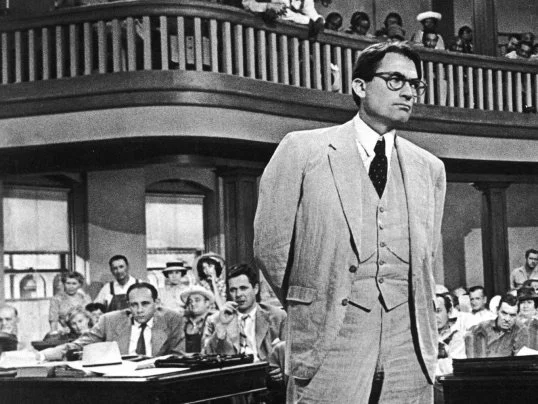
"To Kill a Mockingbird" is among the most beloved novels in history, with worldwide sales topping 40 million copies. It was released on July 11, 1960, won the Pulitzer Prize and was adapted into a 1962 movie of the same name, starring Gregory Peck in an Oscar-winning performance as the courageous attorney Atticus Finch. Although occasionally banned over the years because of its language and racial themes, the novel has become a standard for reading clubs and middle schools and high schools. The absence of a second book from Lee only seemed to enhance the appeal of "Mockingbird."

Lee's publisher said the author is unlike to do any publicity for the book. She has rarely spoken to the media since the 1960s, when she told one reporter that she wanted to "to leave some record of small-town, middle-class Southern life." Until now, "To Kill a Mockingbird" had been the sole fulfillment of that goal.

"This is a remarkable literary event," Harper publisher Jonathan Burnham said in a statement. "The existence of 'Go Set a Watchman' was unknown until recently, and its discovery is an extraordinary gift to the many readers and fans of 'To Kill a Mockingbird.' Reading in many ways like a sequel to Harper Lee's classic novel, it is a compelling and ultimately moving narrative about a father and a daughter's relationship, and the life of a small Alabama town living through the racial tensions of the 1950s."

The new book also will be available in an electronic edition. Lee has openly started her preference for paper, but surprised fans last year by agreeing to allow "Mockingbird" to be released as an e-book.

Copyright (2015) Associated Press. All rights reserved. This material may not be published, broadcast, rewritten, or redistributed.

Source: http://www.businessinsider.com/harper-lee-...

D.C.’s First Bean-to-Bar Chocolate Makers

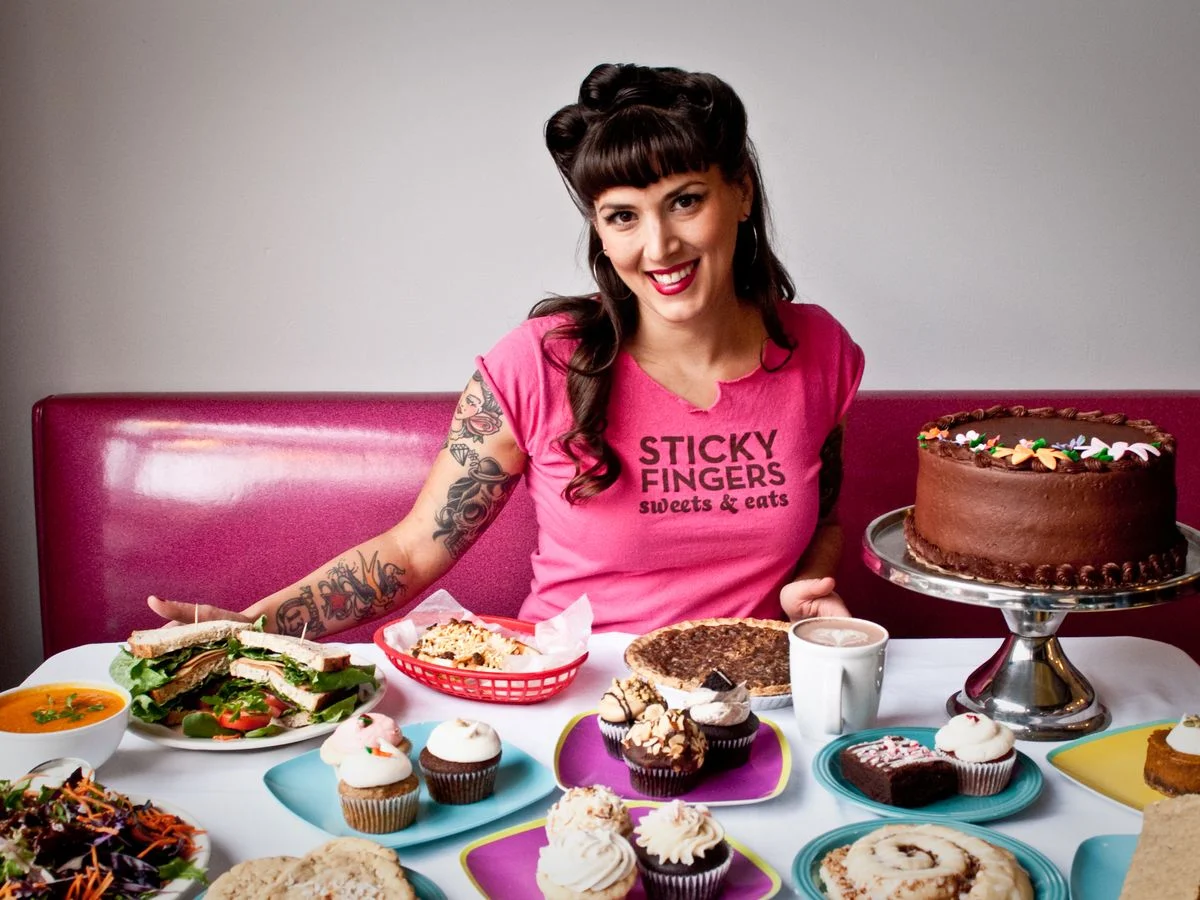
image.jpg


Adam Kavalier is a stickler about his beans. The Undone Chocolate co-founder says he pays about $500 over the market price per ton for his organic farm-direct cocoa beans to get a premium product. And if they’re not up to snuff, he’ll sometimes send them back. Then, in every 150-pound sack of cocoa beans, he sorts out the small ones and the cracked ones by hand.

“These are looking real good. They’re uniform in size,” Kavalier says, scooping up a handful and letting them fall through his fingers. If you lean in, they smell acidic. “The cocoa beans are fermented,” he explains.

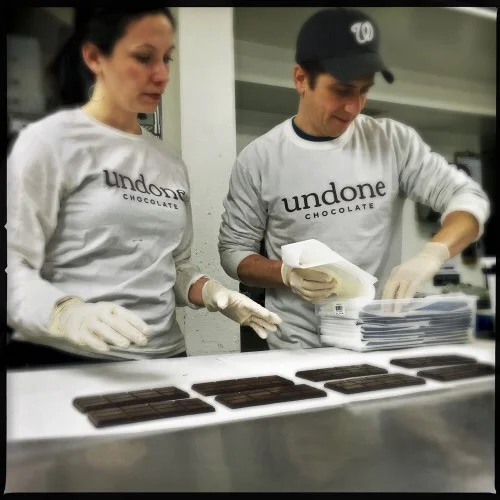
Mary J. Blige’s “Family Affair” is playing in the background of the Union Kitchen workspace, where Kavalier is working on a recent Thursday afternoon next to a dog biscuit maker and a chickpea chip producer—a few of the 50 or so artisans who use the food incubator. Kavalier launched Undone Chocolate with his wife Kristen Kavalier in December, and they now produce 2,000 chocolate bars a month in D.C.

Kavalier spreads the beans out on pans and demonstrates how he roasts them in the oven. When they’re done, he’ll use a vacuum-powered machine called a winnower to separate the shells from the cocoa nibs. The shell will be packaged up and sold as an herbal-earthy tea. But the nibs will be combined with organic cane sugar—the only other ingredient in the chocolate—and ground for three days.

Kavalier lifts the red lid off the cylindrical grinder, which can hold up to 65 pounds of chocolate. It looks like a giant stock pot with two big wheels inside turning in opposite directions—fast, then slow, fast, then slow. It takes a day or two to get the chocolate smooth and another day or two to decrease the bitterness. “A lot of flavor development happens here,” he says.

The chocolate will then be poured in pans and aged for between a week and two months, depending on the origin of the beans. As with wine, aging chocolate brings out complexity and develops the subtle fruit and nut flavors that hide underneath the bitterness.

The chocolate is then chopped into chunks, melted down, and tempered, which gives the product its “shine, snap, and buttery mouthfeel,” before it’s filled in molds, wrapped, and labeled.

“People make Willy Wonka jokes,” Kavalier admits. “I feel like an Oompa Loompa sometimes. It’s a lot of work.”

This isn’t just some whimsical pastime for Kavalier. He has a Ph.D. in biology with a focus in phytochemistry and was headed toward a career in cancer pharmacology before he and his wife decided to start their own chocolate company. While D.C. has chocolatiers like Co. Co. Sala, who create confections and truffles but don’t make bars from the bean, Undone is the District’s first chocolate manufacturer. (The suburbs, however, are home to chocolate makers like Woodbridge’s Potomac Chocolate and Gaithersburg’s SPAGnVOLA.) Later this year, Undone will be joined by Concept C, another bean-to-bar operation opening next to DC Brau on Bladensburg Road NE from couple Colin and Sarah Hartman. She’s a São Paulo, Brazil, native who’s worked for Valrhona and San Francisco’s Dandelion Chocolate, and he’s a Wharton MBA who served in the U.S. Marines.

 Both companies see themselves not just as producers of a delicious treat, but as sources for social and environmental good. Concept C will specialize in bars made with cocoa beans from Brazil’s Amazon and Atlantic rainforests, where fungal infestations devastated the cocoa industry several decades ago. As a result, many farmers cut down their cocoa plantations inside the rainforest canopy and converted them into things like cattle pastures. The Hartmans hope to help restore the rainforest, which has a symbiotic relationship with cacao trees, by supporting the region’s chocolate industry. They plan to donate a yet-undetermined portion of their sales to a Brazilian NGO that purchases deforested, unproductive farmland and helps bring back the native plants and wildlife.

“We’re not just a chocolate company,” says Colin Hartman. “We want to be seen as a company that also actualizes rainforest conservation.”

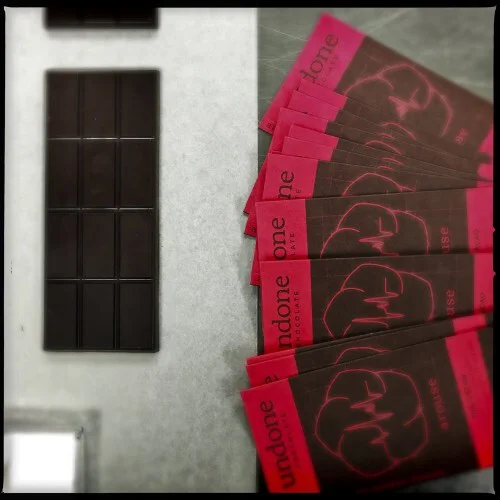
Undone Chocolate is likewise interested in sustainable sourcing, but the Kavaliers are especially touting the health benefits of their chocolate. The bars come with labels like “replenish” and “nourish” and a cardiogram symbol. Whereas most chocolate bars advertise what they contain, Undone wanted to do something different: “It’s kind of similar to vitamin water where you’re actually trying to name a feeling that it provokes,” says Kristen Kavalier.

Adam Kavalier came across cacao, the plant used to make chocolate, while he was studying plant biochemistry and how plants make medicinal compounds in graduate school at the City University of New York. (He then got a post-doctorate degree at Weill Cornell Medical College.) He started making chocolate at home and bringing it into the lab to test its antioxidant levels. He became obsessed with finding beans to craft the most antioxidant-rich chocolate possible.

“It sort of started as this analytical processing thing,” Adam Kavalier says. “Making chocolate takes several steps and involves making some of your own machinery. I love to build things and love to make things ... So it filled a lot of different passions for me, both on the science side and the artistic side.”

Meanwhile, Kristen Kavalier had her own lifelong tie to chocolate. She says when her mom found out she was pregnant with her, she ate tons and tons of chocolate. “The joke was I came out as a chocolate baby instead of a crack baby,” she says. “Growing up, I had all the really funny chocolate sweatshirts or pillows.” It seemed meant to be when Adam Kavalier gave her four homemade chocolate bars on their first date.

Adam Kavalier spent about five years experimenting with recipes in their 700-square-foot New York apartment. The couple had to put an acoustic sound barrier wall over their kitchen door because they’d often have two or three noisy chocolate grinders going at once. Then, because they were worrie about the vibrations disturbing their neighbors downstairs, they stacked up yoga mats. The entire space was filled with huge containers of beans, and nibs, ginders, a temperer, a fan, and other equipment. “It just took up the entire apartment,” Kristen Kavalier says. “The only room that never had chocolate in it was the bedroom, and actually at one point I think it did.”

The Kavaliers started Undone Chocolate on a small scale while they were still in New York, selling some bars to friends and hosting chocolate fondue parties. Then Kristen Kavalier got a job in D.C. with a social analytics startup called NewBrand, where she continues to work full time. Adam Kavalier, who grew up in Chevy Chase, eventually moved the operation here with plans to move into a professional kitchen and build the business.

Concept C’s Sarah Hartman had a very different path to a career in chocolate. She went to culinary school in Brazil and worked briefly in restaurants. She knew she wanted to be in the food industry, but she didn’t know where. Her mother-in-law gave her a book on chocolate while she was still in school, and she started researching chocolate-making and its history. “I kind of fell in love,” she says. She went to an online school called Ecole Chocolat to learn more about the craft before going on to work in corporate sales for Valrhona.

Both chocolate makers saw an unfilled niche for their products in D.C.: Many major cities have a chocolate factory. “We were surprised when we got here that there was no factory,” Adam Kavalier says.

Undone Chocolate currently sells three 70 percent dark chocolate bars, including one with pink Himalayan salt and another with cinnamon, cardamom, and chili. The bars are available at Glen’s Garden MarketYes! Organic Market on 14th Street NW and in Petworth, Smucker Farms, and Compass Coffee, among others. The Kavaliers have national ambitions eventually, as do the Hartmans. When they launch, Concept C will make Atlantic and Amazon rainforest dark chocolate bars plus dark and milk “pure Brazilian” chocolates that blend the two. Later, they’d like to make bars that incorporate Brazilian fruits like cashew fruit and guava. Concept C’s factory will also host tours, tastings, and workshops.

As Kavalier sees it, the competition is welcome. Both are creating high-end products that don’t come cheap given the quality of the ingredients.

“It’s good for all of us to have more chocolate here,” Adam Kavalier says, “because it raises people’s awareness of what’s behind the $7 or $8 bar on the shelf.”


 

image.jpg
Source: http://www.washingtoncitypaper.com/blogs/y...

Hst NE Bar Closed:Owner Allegedly Pulled a Gun on Employee

image.jpg
 

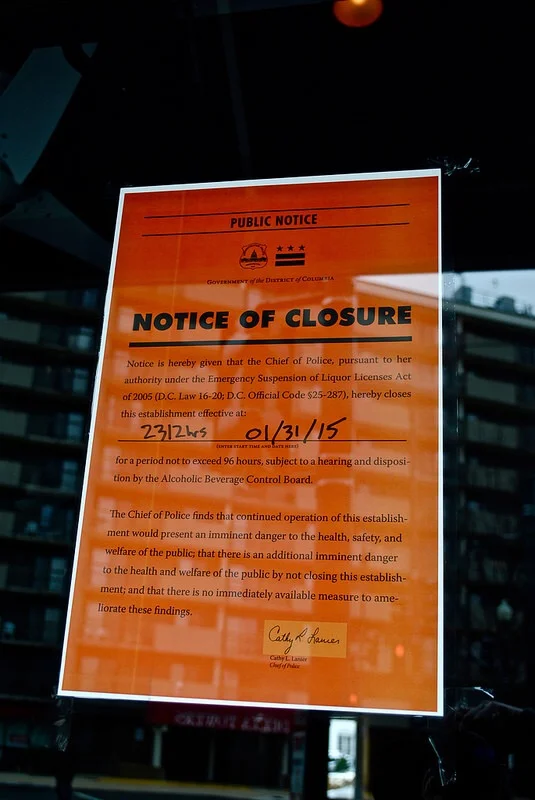
Halftime Sports Bar Shuttered by MPD     The above notice was posted on the door to Halftime Sports Bar  On a day when one would expect to see crowds gathered in local sports bars, Halftime Sports Bar (1427 H Street) sits empty. A notice posted in the front window indicated that the MPD closed the bar down effective 11:12pm January 31st. I was first alerted to this situation by Chris Miller (who is the ANC Commissioner for 6C05) via Twitter (@cemiller9903). Miller indicated that he was on an MPD ride-along last night when an officer informed him that there had been an altercation on Friday and the MPD had discovered that the owner of the establishment had a gun in his possession. I ventured over earlier today to verify the closure. Upon sitting down to write this post I realized that Jay Williams (former ANC rep. from ANC 6A and current Chair of the ANC 6A ABL Committee) was tweeting more details about the incident. Among these details: the owner allegedly pulled a gun during the altercation and MPD Chief Cathy Lanier is recommending that the bar's liquor license be revoked. Ultimately that decision rests with ABRA, but Lanier has the ability to shutter an establishment for up to 96 hours if she:  "finds that continued operation of [an] establishment would present an imminent danger to the health, safety, and welfare of the public; that there is an additional imminent danger to the health and welfare of the public by not closing [an] establishment; and that there is no immediately available measure to ameliorate these findings."  According to its Twitter feed, Halftime featured a live band on Friday.      +++++++++++++++  UPDATE  +++++++++++++++   Jay Williams emailed me [Frozen Tropics] a copy of the letter from MPD regarding the event. It seems to be missing part of a page (Williams received it in this condition), but the story is insane. It says that Halftime owner Karl Graham allegedly pulled a gun and threatened to shoot someone who was arrested for destruction of property at the establishment after he allegedly broke glasses and knocked things over. MPD recovered an H&K 40 caliber semi-automatic .40 caliber pistol from Mr. Graham. MPD appears (this is where it cuts off) to have taken a report for an assault with a dangerous weapon.   +++++++++++++ UPDATE +++++++++++++  The following was posted to an MPD listserv yesterday:  Re: [MPD-1D] Daily Crime Report - 1D An argument inside the Halftime Sports Bar between two employees led to the victim being threatened with a handgun. This case was close with the arrest of the offender and the establishment has been closed for 96 hours but the Chief of Police pending a hearing by the ABC board.   Thank you.   Cmdr. Jeff Brown First District 101 M St SW Washington, DC 20024 (202) 299-2037  On Feb 1, 2015, at 4:24 PM, ****** ******** j******@gmail.com [MPD-1D] <MPD-1D@yahoogroups.com> wrote:   Can you please provide more info about this incident? Thank you.   PSA: 104 CCN: 15015202 RPT DATE: 01/31/2015 02:11 OFFENSE: Assault W/Dangerous Weapon METHOD: Adw -- Gun   BLOCK: 1401 - 1433 BLOCK OF H STREET NE LOCATION: Bar/Night Club START DT: 01/30/2015 18:00 END DT: 01/30/2015 18:05  Sent from my iPhone  On Feb 1, 2015, at 2:57 AM, mpd.reports@dc.gov [MPD-1D] <MPD-1D@yahoogroups.com> wrote:  PSA: 104 CCN: 15015202 RPT DATE: 01/31/2015 02:11 OFFENSE: Assault W/Dangerous Weapon METHOD: Adw -- Gun  BLOCK: 1401 - 1433 BLOCK OF H STREET NE LOCATION: Bar/Night Club START DT: 01/30/2015 18:00 END DT: 01/30/2015 18:05 __._,_.___ Posted by: "Brown, Jeff (MPD)" <jeff.brown@dc.gov>


Source: http://frozentropics.blogspot.com/2015/02/...

Cuba headed to Smithsonian Folklife Festival on the Mall as soon as 2017

image.jpg

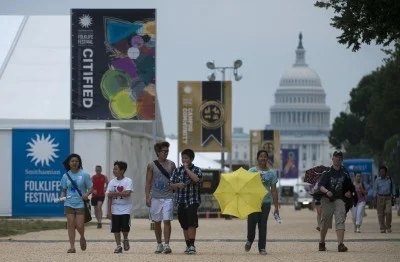
No one knows where diplomatic talks between the United States and Cuba will lead, but we can now say where the nations’ already intimate cultural embrace is headed: to the Smithsonian Folklife Festival on the Mall, as early as 2017.

Cuba will join the eclectic roster of nations — friendly and otherwise — since 1967 that have presented their music, dance, crafts, cooking, work-life and storytelling on that signature American green between the Capitol and the Washington Monument. 

Countries featured in the past range from Colombia, Kenya and Haiti to China, Bhutan and Scotland. Each year, hundreds of thousands of people attend the festival, which is held around the Fourth of July. This year, the spotlight will be on Peru.

“Most Americans don’t know our neighbors who live only 90 miles away,” said Michael Atwood Mason, director of the Smithsonian Institution’s Center for Folklife and Cultural Heritage, which organizes the festival. “The great thing about the festival is that we’ll bring 100 Cubans here, and they’ll speak for themselves.”

What began more than a dozen years ago as the dream of a few scholars in Washington and Havana has gained quiet momentum over the past 18 months. That was also when curiosity about Cuba soared in tandem with the rise of so-called people-to-people exchanges, which gave thousands of Americans the chance to visit Cuba on licensed cultural junkets.

The surprise December unveiling of President Obama’s and Cuban President Raúl Castro’s resolve to temper the nations’ geopolitical relationship added another impetus. Sen. Patrick Leahy (D-Vt.), a Smithsonian regent, led a congressional delegation to Havana this month. The members discussed the festival with their Cuban hosts, among other issues, and Leahy presented the book “The Smithsonian’s History of America in 101 Objects” to Abel Prieto, Cuba’s former culture minister. Leahy reported on the Havana talks to the regents at their meeting in Washington this week. Mason, a specialist in Afro-Cuban religion, will travel to Havana next week to continue planning.

“The opening of the relationship between the two countries is new,” said Richard Kurin, the Smithsonian’s undersecretary for history, art and culture, and the author of the book Leahy gave to Prieto. “We [Americans] probably know more about [Cuba’s] geopolitics than we know about its community life and its customs and traditions.”

The goal, according to Gladys Collazo Usallán, president of the Cuban National Council of Cultural Patrimony, is to show “the characteristics of traditional folk and popular culture of the Cuban people, as these have unfolded through history, their present day currency and their impact on community daily life. And to foster a coming together of the [Cuban and American] peoples via many diverse artistic and cultural expressions.”

The prospect of Cuba’s inclusion in the festival troubles those who also are critical of Obama’s bid to restore diplomatic ties.

“I strongly disagree with the Smithsonian Institution’s proposed attempt to include Cuba as part of its folklore festival,” Rep. Ileana Ros-Lehtinen (R-Fla.), who was born in Havana, said in an e-mailed statement. “Painting Cuba as just another member of the international community does a disservice to the Cuban people and only acts to spread the regime’s political propaganda.”

“If the Smithsonian plans to feature Cuba in its upcoming exhibit, it must display the full reality of Cuban life rather than the facade that the Castro dictatorship portrays to the outside world,” Rep. Mario Diaz-Balart (R-Fla.) said in an e-mailed statement.

Rep. Chris Van Hollen (D-Md.), who joined Leahy in Havana, countered that “when you’re dealing with culture and the arts, it’s a way to bridge political differences. . . . I hope people aren’t going to be scared of dance performances and musical performances.”

Smithsonian officials say that the Cuba display — like all festival offerings — will be steeped in years of field work by Smithsonian and Cuban anthropologists, ethnomusicologists, art curators and other scholars. It will be more concerned, they say, with how traditional Cuban son music led to contemporary timba than with how Cuba’s political system functions — though details are still in the works.

“What we typically insist on is that the Smithsonian has curatorial control over a program,” Kurin said. “This is about your culture, your traditions. It’s not about giving political speeches. We’re selecting people not because of their politics, but because of their artistry . . . their wisdom.”

It costs a country roughly $1 million to present itself at the festival. Well-to-do nations can simply write a check, but in the case of Cuba, as with others, fundraising probably will help underwrite the cost. 

Because so much work remains, for now 2017 or 2018 are the target dates for Cuba to be featured at the festival, Mason said.

In Cuba, the revolution itself is a kind of culture, with customs, expressions and identities outlasting the moment in 1959 when Fidel Castro toppled Fulgencio Batista. Will revolutionary culture itself be on display on the Mall?

Mason demurred, saying the content of the festival has not been designed.

But the influence of the revolution will be indirectly evident. 

“One of the things you can say about the revolution, is that the revolution has given meticulous attention to identification and documentation of these historical forms of community expression that predate the revolution,” said James Early, director of cultural heritage policy at the folklife center. 

The Smithsonian’s relationship with Cuba dates at least to 1977, when former Smithsonian Secretary S. Dillon Ripley dispatched scientists to meet with Cuban scientists. Ripley visited Havana in 1980 to sign a memorandum of understanding for scientific collaborations. 

Cuban culture reached the Mall in a much smaller way during the 1989 Folklife Festival that sampled Caribbean nations, yielding a Smithsonian Folkways CD called “Cuba in Washington.”

Now live-from-Havana performances are commonplace — from the four visits to the Kennedy Center by the Ballet Nacional de Cubasince 1978 to the choral ensemble Camerata Vocale Sine Nomine Feb. 21 at the Church of the Epiphany in downtown Washington and the Malpaso Dance Company March 1 at Dance Place in Northeast Washington. 

Yet the Folklife Festival affords a more intense, personal engagement with the once forbidden island, said Early, who, on behalf of the folklife center, first raised the idea with then-culture minister Prieto nearly 15 years ago.

“This is the ordinary citizen-artist, expressing his or her love, strength of feeling and critique about what they have learned in the family and the community — the spiritual well-being of their lives,” Early said. 

The festival is designed for attendees to be able to question, comment and compare their own cultural vision with the visiting artists. Out of those informal encounters may grow the sort of mutual understanding that diplomats only hope for on their best days.

“The Folklife Festival is not just about the magic of dance and song,” Early said. “It’s about the exchange.”

Source: http://dlvr.it/8J3M8N

Capitol Hill Among Top Neighborhoods for New Parents, Data Shows

image.jpg

A report released today by the District shows Capitol Hill is one of the most popular D.C. neighborhoods for new parents.

In 2011, more new parents lived in the 20002 zip code — which includes the northern portion of Capitol Hill, part of Hill East, the H St NE corridor and NoMa — than any other D.C. neighborhoods but Petworth and Brightwood Park. Most people who lived in the area when their children were born in 2007 still lived there five years later, the report shows. Of the 182 people born in the 20002 zip code in 2007, 101 of them still lived in the zip code at age 5.

The data issued Wednesday by the D.C. Office of the Chief Financial Officer tracks D.C. parents who stay and leave the city, based on 2001-2012 income tax data. Overall, D.C. residents were more likely to leave the city once they have their first child. For people who had their first child in 2007, about half disappeared from city tax records by their child’s 5th birthday. Of people who stayed in D.C., about 25 percent changed zip codes. Middle-income parents, who made between $35,000 and $146,000 annually, were more likely to leave D.C. than their low- or high-income peers.

More new parents lived on the Hill in 2011 than did in 2007. The number of people with a new baby in the 20002 zip code in 2007 was 182. That figure rose to 218 in 2009, 248 in 2010 and 257 in 2011, the data shows.

The number of new parents in the 20003 zip code — which covers the southern portion of Capitol Hill, most of Hill East and Navy Yard — also grew. Just more than 100 new parents lived in the area in 2007. That figure climbed to 140 in 2011.

The number of new parents in the 20024 zip code — which covers the Southwest waterfront — was lower. Just 23 Southwest residents were new parents in 2007, and 27 in 2011.

AROUND TOWN

Source: http://www.hillnow.com/2015/01/28/capitol-...

Scientists Edge Closer To Curing Peanut Allergies

image.jpg


A promising new treatment for individuals with peanut allergies has been trialed on a group of children in Australia, and the results are certainly encouraging. Around 80% of the children given the experimental therapy over an 18-month period became tolerant to peanuts after the treatment was stopped. Although it’s unclear at this stage how long the effects last, the researchers are encouraged by the results and believe the study represents important steps towards developing a long-term cure for potentially fatal peanut allergies.

Food allergies are on the rise in developed nations, but scientists aren’t sure exactly why this is happening. Between 1997 and 2011, food allergies in children increased by around 50%Eight foodsaccount for around 90% of all reactions, including wheat, milk, shellfish and peanuts. The latter is among the most common food allergies, affecting around 1% of people in the U.S. and as many as 3% of children in Australia.

Although most allergic reactions aren’t life threatening, even trace amounts can trigger a response, some of which can lead to a severe reaction known as anaphylaxis where blood pressure drops and the airways swell, causing breathing difficulties and death without treatment. With more and more children at risk of having a reaction to food, there is a clear need to develop treatments that prevent these potentially life-threatening events from occurring.

One group that is striving to achieve this is based at Murdoch Childrens Research Institute, and the researchers here have already made significant progress towards this goal. Their therapy comes in the form of a probiotic, Lactobacillus rhamnosus, combined with a daily dose of peanut protein. The amount of probiotic was fixed, but the peanut protein was increased every two weeks until a maintenance dose of 2 grams was reached. The idea behind the treatment, which is a form of immunotherapy, is to modify the allergic response through gradual exposure to the allergen, so that harmful responses become protective responses.

The therapy was trialed on 28 children, alongside 28 children given a placebo, for 18 months. Two weeks after the study finished, the children were assessed for their ability to tolerate peanuts by repeatedly exposing them to the allergen for three weeks. They found that more than 82% of the children treated with the immunotherapy could include peanuts in their diet by the end of the trial, compared to only 3.6% of the placebo group. While these results are certainly encouraging, the researchers acknowledge that further study is warranted to determine whether the tolerance is long-term.

Meanwhile, a French biopharmaceutical company, DBV Technologies, has also made significant progress towards the ultimate goal of ending peanut allergies with their innovative new “Viaskin” patch. This quarter-size disc, which is adhered to the skin, also delivers small amounts of peanut extract to allergy sufferers in order to gradually sensitize them. During clinical trials, participants given the patch could tolerate 10 more peanuts than they could before. As reported in Fast Co Existthe product is due to shortly reach the final stage of clinical trials and could be on the market by 2018.

Source: http://www.iflscience.com/health-and-medic...

There goes the neighbourhood

image.jpg

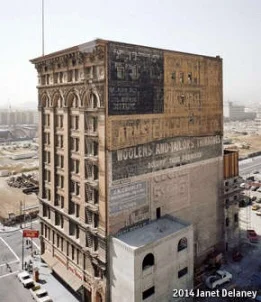
IN 1978 Janet Delaney was a photography student at the San Francisco Art Institute who had spent six months travelling through Guatemala, Nicaragua and El Salvador, taking photographs and interviewing people about the impact of civil war there. On her return to San Francisco she moved into an apartment on Langton Street, not far from city hall and downtown, in an area known as South of Market. One night she saw that a famous residential hotel was being demolished, and knowing that dozens of poor and elderly residents had been displaced, she began taking pictures.

And thus began a new project for Ms Delaney: documenting the transformation of her neighbourhood. An area populated largely by small-business owners, blue-collar workers, families, artists and members of the gay and lesbian community, it had been targeted by the city for significant urban renewal and redevelopment.

The themes of Ms Delaney's work still resonate loudly in 2015 as the demand for housing in San Francisco outstrips supply. In response to the most recent tech boom and the issues of gentrification and displacement facing San Francisco yet again, the de Young museum is hosting an exhibit of Ms Delaney's South of Market photographs. A book of her work was published in December 2013.

"The intention of the show is to create a conversation about how cities change over time," says Ms Delaney. "By looking back we can consider what was lost and what has been gained."

Some of the more than 40 photographs in the exhibition depict quiet moments of everyday life: early-morning sunshine seen from a kitchen window; a woman sweeping the front lobby of a residential hotel; a man getting coffee at a diner; the local barber. Others show more evidence of tumult: a man and his son standing outside a building from which they have just been evicted as workers re-paint it for new tenants; a kitchen charred from an arson fire; a hand-written sign that reads, "Attention vandals, if you don't want to be shot stay away from this street."

Murals, furniture-supply warehouses, news stands, hotel cafés, car workshops, homeless men sleeping in a small park, artists in their studios, and a casket company are all included. Other photos show precisely what the city's redevelopment efforts looked like at that time: construction workers help build the Moscone Center, a large convention site still active today. Photos taken on high from nearby buildings show the project’s immensity.

Also displayed are flyers for town-hall meetings, and other documents of the era, including a letter Ms Delaney sent to the Democrat mayor, Dianne Feinstein (now a senator), in 1981, urging her to learn more about the "critical shift in character" of the South of Market area. "People with more money were moving into a neighbourhood where people had lived who were just getting by," says Ms Delaney.

Placards provide quotes from the many residents whom Ms Delaney interviewed at the time. Approaching them as "neighbours first, subjects second", Ms Delaney asked about their lives in South of Market, and how redevelopment was affecting them. "Every Friday they'd dress up and they weren't going any farther than around the corner," said a resident named Bobby Washington. "We used to sneak in and watch our mothers in there dancing." A musician named Perry Lancaster, who could just as easily be talking about conditions in San Francisco today, tells Ms Delaney, "The landlord, in the next month or so, could say you gotta leave. And then more than likely I'll have to move to Oakland because I can't afford a space in San Francisco."

Other anecdotes have a harsher tone: the head of San Francisco's redevelopment agency at the time is quoted as saying that the South of Market neighbourhood was "too valuable to permit poor people to park on it."

Ms Delaney exhibited some of her South of Market work in the 1980s, but most remained in her studio. She now lectures in visual studies at University of California, Berkeley, and is a visiting artist at the San Francisco Art Institute. "Will San Francisco become an 'everycity', homogenised by big box stores and chain restaurants?" she wonders. "That is an extreme scenario, but when you look at San Francisco in the 1980s and you look again now, it is not so far off."

Source: http://www.economist.com/blogs/prospero/20...

Filmmakers Break Down 'The Fantastic Four' Trailer, Reveal Most Viral-Ready Frame

When a trailer for a would-be blockbuster like The Fantastic Four arrives, we typically examine the clip frame-by-frame, sussing out the tiniest details and extrapolating key plot points.

This time around, though, we figured we’d have the filmmakers do the heavy-lifting themselves.

Cue director Josh Trank (Chronicle) and screenwriter-producer Simon Kinberg (X-Men: Days of Future Past), who graciously agreed to sit down for this exclusive commentary (above) on the newly released teaser about the Fox reboot of the classic Marvel hero team.

Source: https://www.yahoo.com/movies/the-fantastic...