Why Airlines Want to Make You Suffer


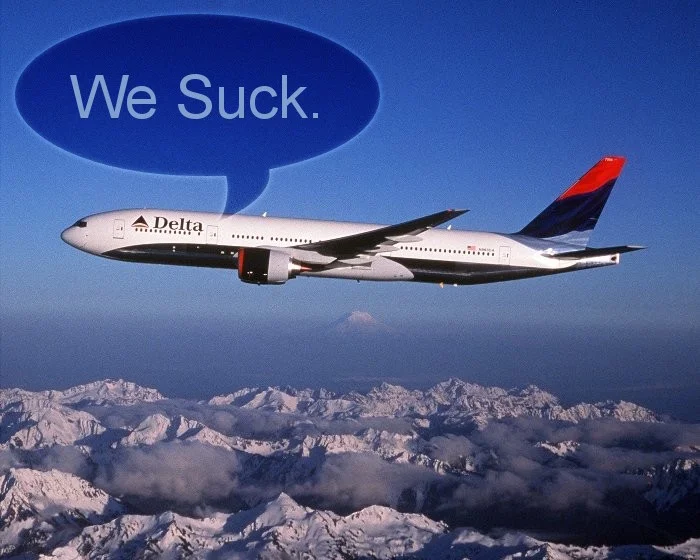
This fall, JetBlue airline finally threw in the towel. For years, the company was among the last holdouts in the face of an industry trend toward smaller seats, higher fees, and other forms of unpleasantness. JetBlue distinguished itself by providing decent, fee-free service for everyone, an approach that seemed to be working: passengers liked the airline, and it made a consistent profit. Wall Street analysts, however, accused JetBlue of being “overly brand-conscious and customer-focussed.” In November, the airline, under new management, announced that it would follow United, Delta, and the other major carriers by cramming more seats into economy, shrinking leg room, and charging a range of new fees for things like bags and WiFi.

It seems that the money was just too good to resist. In 2013, the major airlines combined made about $31.5 billion in income from fees, as well as other ancillaries, such as redeeming credit-card points. United pulled in more than $5.7 billion in fees and other ancillary income in 2013, while Delta scored more than $2.5 billion. That’s income derived in large part from services, such as baggage carriage, that were once included in ticket prices. Today, as anyone who travels knows well, you can pay fees ranging from forty dollars to three hundred dollars for things like boarding in a “fast lane,” sitting in slightly better economy-class seats, bringing along the family dog, or sending an unaccompanied minor on a plane. Loyal fliers, or people willing to pay a giant annual fee, can avoid some of these charges; others are unavoidable.

The fees have proved a boon to the U.S. airlines, which will post a projected twenty-billion-dollar profit in 2014. To be fair, airlines are not just profiting because of fee income. Reduced competition, thanks to mergers, helps. There is also the plummet in the price of oil, which the airlines seem to have collectively agreed is no reason to reduce fares or even remove “fuel surcharges.” But for the past decade it is fees that have been the fastest-growing source of income for the main airlines, having increased by twelve hundred per cent since 2007.

If fees are great for airlines, what about for us? Does it make any difference if an airline collects its cash in fees as opposed to through ticket sales? The airlines, and some economists, argue that the rise of the fee model is good for travellers. You only pay for what you want, and you can therefore save money if you, for instance, don’t mind sitting in middle seats in the back, waiting in line to board, or bringing your own food. That’s why American Airlines calls its fees program “Your Choice” and suggests that it makes the “travel experience even more convenient, cost-effective, flexible and personalized.”

But the fee model comes with systematic costs that are not immediately obvious. Here’s the thing: in order for fees to work, there needs be something worth paying to avoid. That necessitates, at some level, a strategy that can be described as “calculated misery.” Basic service, without fees, must be sufficiently degraded in order to make people want to pay to escape it. And that’s where the suffering begins.

The necessity of degrading basic service provides a partial explanation for the fact that, in the past decade, the major airlines have done what they can to make flying basic economy, particularly on longer flights, an intolerable experience. For one thing, as the Wall Street Journal has documented, airlines have crammed more seats into the basic economy section of the airplane, even on long-haul flights. The seats, meanwhile, have gotten smaller—they are narrower and set closer together. Bill McGee, a contributing editor to Consumer Reports who worked in the airline industry for many years, studied seat sizes and summarized his findings this way: “The roomiest economy seats you can book on the nation’s four largest airlines are narrower than the tightest economy seats offered in the 1990s.”

Boarding for non-élite flyers has also become a miserable experience. There are far more efficient ways to load planes than the current back-to-front method, which is actually slower than random boarding. The process takes longer still thanks to the practice of letting flyers with status board out of turn and thanks to luggage charges, which compel fee-avoiders to cram their bags into overhead compartments. Airlines lack a real incentive to fundamentally improve boarding for everyone—by, for example, investing in methods such as filling both ends of an airplane at once. It would make life better and also defeat the status racket.

Fee models also lead most people to spend unwarranted time and energy calculating, agonizing, and repacking in the hope of avoiding paying more. The various fees make prices hard to compare, as a ticket can now represent just a fraction of the total expense. These are real costs, and they are compounded by ticketing practices, which demand perfect timing. When customers miscalculate their schedules or their plans change, the airline is ready with its punishment: the notorious two-hundred-dollar rebooking and change fee. Those change fees are particularly lucrative: in 2014, Delta and United are projected to collect nearly a billion dollars each. And the greater social cost comes from those who didn’t change their tickets even though they wanted to.

The fee model isn’t the only reason air travel has become more miserable in recent years. Airlines also benefit directly by throwing more seats into economy, because they have more to sell. But as mergers reduce competition airlines can more safely collude to provide poorer levels of service, and everything that adds to and increases differential experiences drives fee income, which is the most lucrative side of the business. Perhaps that’s why Delta’s new cabin plan offers five different classes of service, and why one unnamed major airline is reportedly considering introducing a level called “economy minus,” with even smaller seats than basic economy.

The various costs described here will not appear on any bottom line but can be easily witnessed in angry families, exhausted flight attendants, and the general sense of defeat emanating from passengers exiting coach. At best, it can be said that more people are able to fly for less; but, as JetBlue demonstrated, there need not be so much misery along the way. Ultimately, the fee models and the distinctions they draw make class inequality, which may be felt less in other places, painfully obvious. The conditions of carriage may lack the importance of other, more pressing social issues. But when an airline like JetBlue is punished for merely trying to treat all of its passengers decently, something isn’t right.

image.jpg
Source: http://www.newyorker.com/business/currency...

Playboy CEO: Nudity Could Completely Vanish From the Brand

image.jpg


With so much free porn oozing from the Internet today, why would anyone look at a tame, old brand like Playboy -- online or in print?

Scott Flanders, 57, the first Playboy Enterprises Inc. CEO not to share DNA with its 88-year-old founder and figurehead Hugh Hefner, says no one’s ever asked him this “critical inflection point” before.

Hmmm. Never? Really? But it’s such an obvious question, one that he really has no choice but to correctly answer -- and soon -- to save the aging and troubled legacy brand. Flanders took the reins from Hefner’s daughter Christie in 2009, the year Playboy lost $51.3 million, its stock price fell below a dollar a share and it barely escaped being delisted by the New York Stock Exchange. Talk about baptism by fire.

The 20-year media veteran, formerly CEO of Freedom Communications Inc., Columbia House and several other mainstream publishing giants, admits that he isn’t entirely sure what the magic fix is. “I’m still chipping away to reveal the elephant that will be our future,” Flanders tells Entrepreneur, comparing the future Playboy to an ice sculpture in progress, a vision not yet realized.

Flanders says it’s likely not more of what put Playboy on the map (and under our beds) in the first place that will save it: sexy naked women.

“You could argue that nudity is a distraction for us and actually shrinks our audience rather than expands it,” says Flanders. “At the time when Hef founded the company [in 1953], nudity was provocative, it was attention-grabbing, it was unique and today it’s not. It’s passé.”

So passé that he predicts it will eventually vanish from the Playboy brand altogether. Probably not as long as Hefner still owns a third of the company and personally selects all of the nude spreads in the magazine, along with each Playmate of the Month and Year.     

“Sexy, beautiful, sophisticated women that men aspire to want to have attracted to them, that will never change in the DNA of Playboy, but, I suspect, whether it’s in my tenure or my successor’s, that Playboy will evolve away from and perhaps completely [be] out of nudity.”

The world’s best-known bunny, in business now for 61 long years, is indeed cleaning up its act online and has been for some time. Well, somewhat. A newly “safe for work” Playboy.com launched last summer, Flanders eagerly points out. Call us old-fashioned, but with so many strategically nipple-covering “hand bras” and “arm bras” still on the site, we wouldn’t exactly classify the racy sex-themed content hub as SFW. The site links to Playboy’s 18 and over online nudie pics destination, PlayboyPlus.com.

Let’s backtrack a bit, to when Playboy first started to strip itself away from the sexier side of the biz, Hefner’s favorite side from the very beginning. The “business end of the business” never interested him and it shows.

When Flanders came on board, Playboy was financially on the brink of extinction. Brand-wise, it had devolved into a poorly run business inside and out.

“We saw ourselves -- the company, the management, the leadership, all the way to the rank and file -- as this powerful global media company,” Flanders says, “and, in fact, we were a powerfully recognized brand, but our businesses, each one of them, was weaker than the next.”

Flanders knew he was boarding a sinking ship, but walked the gangplank anyway, even after his youngest daughter vowed she’d never speak to him again if he took the job because she “thought it was the creepiest thing.” (She later convinced him to take the position and eventually interned at Playboy for a summer.)

Whatever pushback was headed Flanders’ way at Playboy -- and he’d get plenty of it -- he was confident he could handle it. “I had experience working with moguls and complex governance situations with dynamics of larger-than-life egos and complicated family dynamics,” he says. “That didn’t mean it was going to be easy for me or anyone else. It’s just I was undaunted by that.”

Ever since he took the post, which he says he would not have accepted “had I known what I was stepping into,” he has executed one change after another, each a step closer to fulfilling his plan to 1) “transform Playboy into a brand management company,” and 2) to return Playboy to “its original luster, when it was in its heyday of the 1960s and 1970s.”

First he cut staff by 75 percent. Only 11 of the 535 non-Playboy mansion staffers who were on the payroll when he started remain today, he says. The company, not counting a small army of an estimated 65 mansion employees, now has just 200 full-time employees. Some work from home.    

Restoring Playboy’s 'original luster' -- and profitability

After gutting the ranks and impressively taking the company from the red to a $10 million profit, Flanders convinced Hefner to return Playboy to its roots as a private company. In March 2011, Hefner bought his baby back for $207 million, in association with private equity partner Rizvi Traverse Management.

Nine months after going private, in what Flanders calls “the biggest mistake I’ve made at the company,” Playboy gave up 15-year operating control of Playboy.com. It had to as part of a licensing agreementwith the Internet porn powerhouse Manwin, now MindGeek. The global conglomerate still operates Playboy’s branded adult TV assets, Playboy TV and Playboy Plus. Playboy also sold its Spice channels to Manwin, but has no interest in them.

“To restore the original luster of the brand, we were chipping away those things that we were not,” Flanders reflects. “First and foremost was selling off the adult TV business. Playboy should not have association with being in the sex-act business.”

Last Spring, Playboy recaptured full control of Playboy.com “at significant expense” and relaunched it in August. It’s chock full of a contradictory mix of highly shareable, mostly advertiser-friendly clickbait content, BuzzFeed-style lists, flowchart infographics that help men decide whether or not to catcall a woman in public and a growing crop of articles written by prominent feminists. While the text is mildly toned down -- close to on par with Maxim or GQ -- the visuals are still mainly bare breast and skimpy bikini-centric.

Meanwhile, Flanders says the consumer reaction to the overhauled site has exceeded his expectations. With a healthy bump in traffic from Playboy’s popular Facebook page, the number of unique visitors per month has quadrupled since June, a Playboy representative notes, from a low of 4 million uniques to an estimated 14.5 million last month.

So far, early as it is, taking some of the dirtier aspects out of Playboy.com seems to be gaining momentum with consumers, at least better than it did with the TheSmokingJacket.com, Playboy’s first and failed 2010 online rebranding attempt. There’s also Playboysfw.kinja.com, launched the same year, a website Jezebel describes as “all writing, no girls.”

Playboy also has a free “SFW” Androidapp. It recently pulled the poorly reviewed Apple version of it from iTunes, replacing it with Playboy NOW, its new, “sexy, non-nude” free mobile video app.   

Looking back, Flanders says he regrets the Manwin agreement because the company used Playboy.com to funnel traffic to its hardcore adult subscription sites, which he thinks was “too off-brand” with Playboy’s shift to a retro-clean rebrand, a return to the classy Playboy your grandfather might recall as a gentleman’s destination. The one he, you know, “read for the articles,” some of the earlier ones by literary greats like Atwood, Updike and Nabokov (the caliber of which you won’t find on Playboy.com).

Still, the Manwin deal was flush with upsides, some that would help Flanders reposition Playboy as less of a lewd publishing outlet and more of a clean-cut brand-management company. Specifically, it afforded Playboy the cash to recruit what Flanders calls a “world-class management team,” kill off 70 brand-weakening licensing deals and relocate from its original headquarters in Hefner’s native Chicago to a glitzy refurbished Beverly Hills office and photo studio (swanky full bar included, of course).

The deal also enabled Playboy to expand what Flanders sees as a rescue cash cow, rather cash rabbit -- exploiting the enduring popularity of Art Paul’s immediately recognizable tuxedo-tied rabbit-head logo outside of the U.S., particularly in censored China. “We generate almost $30 million a year in net licensing profits from China alone,” Flanders says, “a country where we’ve never had a magazine or a website or a TV channel.”

By the third quarter of 2012, consumer licensing -- from rabbit emblazoned apparel to Coty perfume and just about everything imaginable in between -- accounted for 74 percent of Playboy’s profits.  

Flash forward to 2013. Playboy, “in the midst of a multi-year turnaround,” was still clawing its way back to relevance in North America under Flanders’ direction, having doubled its global licensing revenue and freshly refinanced $185 million in loans. It was also closing in on a fat stack of more promising licensing deals. But, when those deals didn’t close fast enough, Standard & Poor’s cut Playboy’s corporate credit rating down to a dismal CCC+, and downgraded its senior-secured debt to a B-.    

It’s not clear where Playboy stands financially today. The company declined to share its latest earnings metrics with us. We do know, though, that in 2009, when Flanders came aboard, its annual revenue was $240 million. In 2012, it was $135 million, according to The Wall Street Journal.

Flanders did, however, share that Playboymagazine, the namesake flagship of the brand, is now “breaking even.” It once boasted 7.2 million readers at its peak in 1972, but only has a print circulation of 1.2 million and an estimated 30,000 paying digital subscribers. The glossy was hemorrhaging around $12 million per year back when Flanders took the helm, with a circulation of 2.5 million. He credits the publication’s return to the black to a combination of steady but “flat” ad revenues, licensing earnings from 29 international editions and to its recently modernized photography.

An iconic brand and an uncertain future

Though he claims he has no actual editorial pull, Flanders nudged others within the company to contemporize the overall look and feel of the publication. He felt it had grown “stale,” mostly due to using essentially the same pool of photographers for more than 25 years. Updating the visual aesthetic, he says, particularly the eye candy, of Playboy was far from an easy sell.

“People said, ‘Oh, we know what Hef likes. He likes this type of photography,’ and I said, ‘Well that’s bullshit. That’s like saying he likes the same meatloaf he’s been eating for 25 years. Let’s give him a piece of steak and see if he likes that,’” Flanders says. “And, sure as hell, as soon as they gave Hef more contemporary photography he loved it.

Cooking up a new, improved visual buffet worked for Hef. But will it attract new readers? It might not matter anyway. Flanders says the circulation of the magazine will only get smaller and smaller in the years ahead. Perhaps it will even go away altogether, like Larry Flynt says Hustler will, thanks to the Internet and its endless supply of free porn of every flavor.

Will floating yet another new “SFW” online presence with buzzy viral content and tamer chic pics work for Playboy’s target market -- 18- to 34-year-olds (though Flanders says it appeals to “13- to 80-year-olds”)? Flanders hopes so.     

“We are not aggressively investing to chase that marginal reader,” Flanders says, “because they’re frankly not that valuable to our advertiser. Instead, we’re shifting much of our content investment toward digital, and specifically video. The viewer of our digital content is younger and more affluent and spends more time with the content than our older, less affluent more rural viewer of our magazine.”

And therein lies the naked truth: Like all publishers, adult and non, Playboy’s print readers aren’t getting any younger or richer or more attractive to advertisers. Online is where Playboy’s future audience lives, if it can figure out a way to attract them and keep them coming back for more. If it can’t, there’s always the fallback licensing cash rabbit, the bunny that takes a licking and somehow keeps on ticking, at least for now.

“Everybody looks at that Playboy rabbit-head logo and it represents something to them,” Flanders says. “They’ve heard of it. They’ve seen it. They have a connection to it and it represents something to them. It’s what we are. It’s powerful and costs hundreds of millions, if not billions of dollars, to create that kind of unaided awareness on a global basis.”

Source: http://www.entrepreneur.com/article/240346...

How Smartphone Use Is Changing The Way Thumbs and Brains Communicate

image.jpg


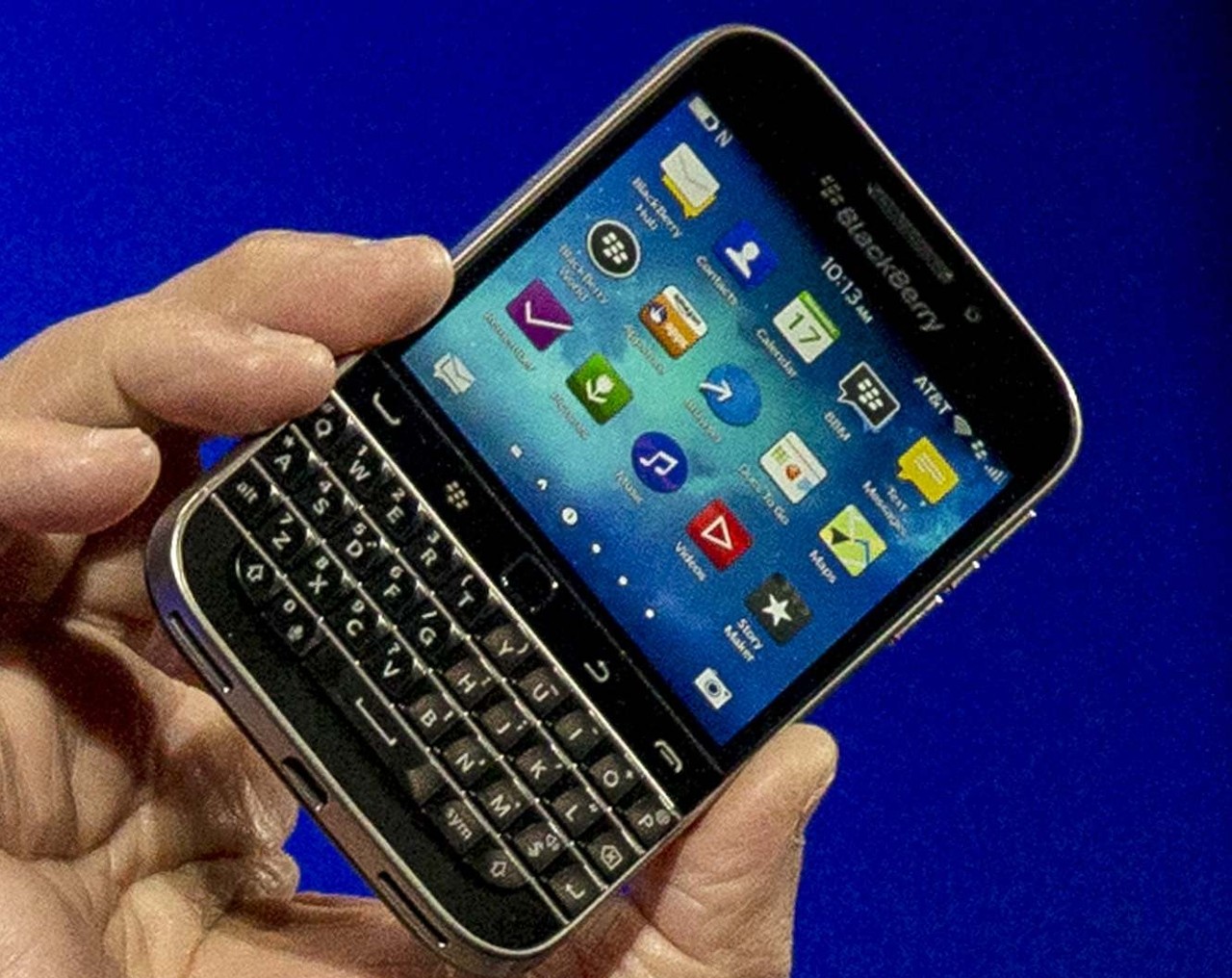
Opposable thumbs gave ancient humans a huge evolutionary advantage by allowing for use of tools. More recently, these thumbs also allow for people to quickly type on screens of smartphones and other touchscreen devices. A new study has found that this recent widespread mode of communication is actually changing the way thumbs and the brain talk to one another, demonstrating the plasticity of the human brain. Arko Ghosh of the University of Zurich is lead author of the paper, which has been published in Current Biology.

"I was really surprised by the scale of the changes introduced by the use of smartphones," Ghosh said in a press release. "I was also struck by how much of the inter-individual variations in the fingertip-associated brain signals could be simply explained by evaluating the smartphone logs."

Ghosh and his team were inspired to embark on this research after noticing that a large number of people are now using their thumbs and fingertips in a way that has not been seen before in human history. In addition to merely performing these tasks, they are done for several hours a day, every single day. This is a tremendous amount of time spent on a repetitive movement.

"I think first we must appreciate how common personal digital devices are and how densely people use them," Ghosh explains. "What this means for us neuroscientists is that the digital history we carry in our pockets has an enormous amount of information on how we use our fingertips (and more)."

While there has been extensive research performed on how playing video games can alter the plasticity of the brain, or how music can influence the brains of those who play professionally, there has not been similar study into the tactile influence of touch screens of the average person. The research was aided by the fact that the phones of the study participants provide a complete history of the activities performed over the course of each day, keeping a record of the amount of use the phone received.

The researchers monitored the study participants through the use of electroencephalography (EEG), which recorded the brain activity associated with the use of smartphones. The participants used their thumbs along with the middle and index fingers.

The researchers found that the brain was very responsive to the digits engaging in smartphone use. When compared to those who don't use smartphones, those that did had higher spikes of activity in the regions of the brain associated with the thumb and fingertips. The more frequently the subject used the phone, the higher the level of activity was.

"We propose that cortical sensory processing in the contemporary brain is continuously shaped by personal digital technology," the authors wrote in the paper.

Of course, there are overuse injuries such as carpal tunnel syndrome that go along with excessive use of smartphones, so not everything associated with this technology is a good thing. Weighing the full influence of this mode of communication will be the subject of future injuries. Additionally, other study is needed to determine if the type of activity performed on the phone influences brain activity levels.


Source: http://www.iflscience.com/brain/how-smartp...

Video Games and the Olympics

image.jpg

WASHINGTON — A stadium is packed with 40,000 spectators. Tens of millions more watch online, and even in theaters that have been reserved to broadcast the event on the big screen. It’s the World Championship … of the League of Legends video game.

A far cry from the privacy of basements or game rooms, the hyper-popular online game — which boasts roughly 27 million daily users around the world — has become a viable spectator sport. With teams that live and train together competing for a $1 million first prize, the virtual game has moved into a very real and very lucrative space.

Earlier this year, Robert Morris University created the first American video game scholarship, awarded to 35 students. The scholarship means the players — all of whom are playing League of Legends — are treated as varsity athletes. It’s a first step toward speaking about e-sports, as video games are now being referred, in the same breath as real sports.

But could gaming make the ultimate breakthrough into mainstream athletics to become part of the Olympics?

Rob Pardo, creator of World of Warcraft, recently told BBC that he believes “there’s a very good argument for e-sports being in the Olympics.” And while it’s certainly hard to argue with the global interest in the competitive activity, there are other hurdles to clear before we see anyone gaming for gold, silver and bronze.

Even if the sports bodies accept that gaming falls into a similar mental skill-set category to chess, that won’t necessarily help it make the Olympics. After all, chess is still not an Olympic sport. And some sports executives aren’t even willing to concede that much.

“It’s not a sport,” said ESPN President John Skipper at a conference in New York, according to the New York Post.

That’s a notable statement coming from the head of a sports entertainment network that includes poker, spelling bees and the Nathan’s Famous hot dog-eating contest on its list of programming.

There’s also the issue of the game itself. While League of Legends has grown into a giant and dominates the marketplace right now, there are thousands of games, and a new one could very well come along to unseat the current king. If the industry shifted its attention (and its money) to a different kind of game, would there still be a unified front to push for IOC recognition?

Whether such recognition will ever be given, e-sports have made their biggest inroad yet into the world of mainstream sports.

Source: http://wtop.com/tech/2014/12/video-games-e...

Chain the Russian bear and tear out its claws

The week the dam broke in Russia and ended Putin's dreams

image.jpg


“It’s going to be worse than the default crisis in 1998. This time you have a situation where the West is against them,” said Mr Browder from Hermitage

Gallows humour is back in Moscow. Asked what he would do to stop the rouble spiralling out of control, the former governor of Russia’s central bank replied: “I would pick up a pistol and shoot myself.”

This was the week when the country’s long-festering crisis turned virulent. A last-ditch attempt to defend the exchange rate by raising interest rates to 17pc failed within hours, yet the shock is surely enough to set off a chain of corporate failures and push banks over the edge. 

Traders in the City watched open-mouthed as the dam broke on Black Tuesday. The event exposed the awful reality that the Kremlin does not have the infinite foreign reserves that many had supposed. “What is happening is a nightmare that we could not even have imagined a year ago,” says the central bank’s deputy chief, Sergei Shvetsov. 

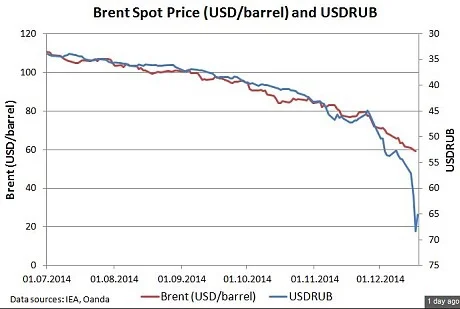
The currency has since stabilised at 60 to the dollar. But it has lost half its value in a year. Russia’s $2.1 trillion (£1.3 trillion) economy has shrunk to $1.1 trillion, half the GDP of California.

The external debt of Russian banks and companies has by mathematical effect ballooned to 70pc of total output. “A Russian downgrade to junk is only a matter or time,” says Tim Ash, from Standard Bank. 

“The crisis is suddenly filtering into people’s daily lives,” says Bill Browder from Hermitage. “55pc of consumer goods in Russia are imported and these are doubling in price. People are buying anything they can that keeps its value.”

Vedomisti reports that there is a de facto run on banks as depositors pull what they can from ATM machines, fearing the guillotine at any moment. Soviet queues are appearing again. 

Crowds have descended on Ikea stores, converging in pick-up trucks to buy hard goods before it is too late. The company suspended sales of kitchens on Thursday, saying it cannot meet demand.

Those scrambling to buy cars may have missed their chance. Jaguar Land Rover has halted sales to Russia. So has General Motors, citing “rouble volatility”. The big three dealerships - Transtekhservice, Major Auto, and Avilon - have frozen sales. 

As the buying frenzy subsides, the eerie stillness of depression may instead take hold. The central bank says the economy could contract by 4.7pc next year if oil prices settle at $60 a barrel, but that was before the rate shock. BNP Paribas says each 100-basis point rise cuts 0.8pc off GDP a year later. Rates have risen 750 points in a week. 

It was also before President Vladimir Putin disclosed his second line of defence. “We must squeeze rouble liquidity to stabilise the currency. We mustn’t waste our foreign exchange reserves thoughtlessly,” he says. This means driving the MosPrime (Libor) rates to 30pc. Those borrowing to “short” the rouble are crushed, but so are Russian banks.

“It’s going to be worse than the default crisis in 1998. This time you have a situation where the West is against them,” says Browder. “Russian companies are shut out of the global capital markets. The country can’t turn to the IMF because Washington will block it. There is no lender of last resort.”

Western sanctions are still escalating. With wicked timing, President Barack Obama this week chose not to veto a law passed by the US Congress that tightens the noose further, even though he warned previously that it may irk European leaders and erode Atlantic unity. The law implies fresh curbs on the Russian energy sector, and may limit credit to Gazprom. It stiffens Ukraine with $350m of military aid, a high-risk move. The White House says Putin can reverse the process at any time by implementing the Minsk ceasefire deal agreed three months ago. “The aim is to sharpen the choice that he faces,” it says.

Putin lashed out defiantly on Thursday, accusing the West of trying to “chain the Russian” bear and tear out its claws. “The issue is not Crimea. We are protecting our sovereignty and our right to exist,” he says. 

It was vintage Putin, a three-hour tirade, with a strong hint that the oil price crash is due to a plot by the US and Saudi Arabia to cripple Russia. It contained a warning to his enemies at home that there is no safe line between opposition and “Fifth Columnists”.

Putin invoked the cause of Mother Russia, calling on his people to brace for two years of hardship, yet he is clearly on thin ice. “Putin’s sales pitch has always been that he brought the country back to stability after the craziness of the Yeltsin years,” says Browder. “He could get away with it because the oil boom created enough money for everybody, but now the money has run out. People are getting very angry. If oil all stays at $60 for a year, he risks a palace coup from his own ‘Siloviki’ (former KGB) circle.”

There was a frisson of this at Putin’s press conference, though he deflected a blunt question by saying “there can’t be a palace coup in Russia, because there are no palaces”. 

The grumbling is getting louder. “We all cheered when we took back our Crimea. Now we are reaping the fruits of our conquest,” says the governor of Krasnodar, Alexander Tkachyov. “We thought that nothing would happen. Now we face the payback, because there are no miracles. It has become clear that Russia is facing a real economic war, and there should be no illusions.”

Bloomberg reports that Putin asked his key advisers at a secret meeting in February whether Russia had sufficient foreign reserves to withstand a showdown with the West if it annexed Crimea. They assured him that Russia could weather the storm. 

Putin took a huge gamble. Deutsche Bank and other lenders were already forecasting an oil glut in 2014 as the US flooded the markets with shale oil. Nor did the Kremlin team seem to fully grasp that Russia is far more vulnerable to sanctions now that it depends on foreign capital and is tied into global finance. For the last decade, an elite cell at the US Treasury has been sharpening the tools of economic war, crafting ways to bring countries to their knees without firing a shot. 

The strategy relies on hegemonic control over the global banking system, buttressed by a network of allies. Iran has felt its grim effects. “It is a new kind of war, like a creeping financial insurgency, intended to constrict our enemies’ financial lifeblood, unprecedented in its reach,” says Juan Zarate, who once led the team. 

Putin can retaliate in other ways. “He is going to escalate. The huge prize for him is to test the credibility of Nato while Obama is still in office,” says Browder. That worry is shared by many, especially in the Baltic states with Russian minorities. Four fifths of Estonia’s fortress town of Narva are ethnic Russians, and they live within sight of the border. An incident could flare up at any time. 

“The nightmare scenario is if ‘little green men’ appear in one of the Baltics, and it then invokes Nato’s Article V [mutual defence clause],” says Ian Bond, the former British ambassador to Latvia and now at the Centre for European Reform. Any dispute may be murky. Yet if Nato ever fails to uphold an Article V plea, the alliance withers. 

Russia was sliding into decline before the storm hit this year. Its trend growth rate had collapsed. It was near recession when crude was trading at $110 a barrel, a remarkable indictment of Putin’s 15-year reign. The country has become reliant on the commodity supercycle. Oil, gas, and metals together make up 73pc of exports and half the budget. The economy is a patronage machine built on commodity rents, a textbook case of the “Dutch Disease”.

The IMF says the effect has been to smother everything else, hollowing out the industrial core. Non-oil exports fell from 21pc to 8pc of GDP. 

The economy is a tangle of bottlenecks. Russia ranks 136 for road quality, 126 for the ability of firms to absorb technology, 124 for availability of the latest technology, 120 for the burden of government regulation, and 105 for product sophistication, in the World Economic Forum’s index of competitiveness. 

Critics say Russia squandered its chance to build a modern, diversified economy at the end of the Cold War. It now faces a bleak future as an ageing crisis hits and the workforce shrinks by 1m a year. Lubomir Mitov, from the Institute of International Finance, says Russia is weaker than it was in the Soviet era of the 1980s, when it still made things and brimmed with engineers. “They have lost their technology,” he says.

Mitov says it will be lucky merely to repeat the stagnation of the Brezhnev era. Every $10 fall in the price of oil cuts export revenues by 2pc of GDP. The “financing gap” will soon be 10pc of GDP. “It is a perfect storm,” he says. 

Russia still has $414bn of reserves but this is below the country’s $700bn external debt, in stark contrast to 2008. 

“In addition to being twice as levered, Russia is entering this crisis with lower reserves,” says Tatiana Tchembarova from BNP Paribas. She says the Kremlin has already committed $143bn of reserves for next year, and “more will be required to support Russia’s banking system”. The bank rescue cost $170bn five years ago.

Russia firms must repay $120bn of hard-currency debt over the next year. They cannot roll over the loans. Eric Chaney from AXA warns clients to brace for a wave of defaults by “non-strategic” companies. 

The Kremlin will prop up national champions but this bleeds their reserves. Browder says Putin is trying every trick to put off the inevitable, but capital controls are coming. “They won’t announce it: they will just starting doing it quietly by forcing companies to convert dollars into roubles,” he says. 

The Nordic bank SEB says the central bank faces a horrible choice between ferociously high interest rates – perhaps 100pc – or exchange controls. “We think it will reluctantly opt for the latter,” it says. SEB expects the Kremlin to freeze dividends and force companies to repatriate earnings. Isolation and Stalinist autarky lie ahead. 

What is remarkable is that Russia’s leaders so quickly forgot the lesson of the mid-1980s when collapsing oil prices broke the back of the Soviet Union. Former premier Yegor Gaidar dated the moment to September 1985, when Saudi Arabia flooded the crude market. The Kremlin sold its gold, down to its pre-1917 imperial bars, until it ran out of cash for food imports. “The collapse of the USSR should serve as a lesson to those who construct policy based on the assumption that oil prices will remain perpetually high. A seemingly stable superpower disintegrated,” he said.

Source: http://www.telegraph.co.uk/finance/economi...

Listen Up: DJ Avervge 'Deep District Guest Mix Vol.3'

For Volume 3, Avervge (@awdj) takes us on a journey that's equal parts futuristic and retro. For those already familiar, it's his signature sound. As for the uninitiated, you're in for an early Christmas present. Tracklist: AWDJ Drop 5AM - (dc) What It's Worth - Black Milk Lost Cause - Diamond District Used to the Melody - Sango Private Jet - Penthouse Penthouse Her (Majid Jordan Edit) - Stwo Black Sand - Joose x Sango (Savon Remix) Bitch I Got A Nike Shop - Haan808 For You - Nightwave Throw Some D's - Nehzuil X Rich Boy Electric Piano Flip (J Dilla) - Dave Sparkz A Little of This (95 Flava Remix) - Dave Sparkz The Door - D'Angelo Ball Drop - Fabolous ft. French Montana Sade's Taboo - Tall Black Guy Without A Clue - The 1978ers Back In the Day - Youtaro Style I Got - Raff Alpha Sugah Daddy - D'Angelo Cannonball - Illa J That Guuurl - Dr. Mad Holiday - Homeboy Sandman No Role Modelz - J. Cole Golden State of Mind - Fashawn ft. Dom Kennedy That Simple Life - Karma Kid Fake Ass DJs Outro Original photo by Rob Ketcherside: flic.kr/p/9Cc1b5

DJ Avervge Deep District Guest Mix Vol.3

Tracklist:

AWDJ Drop
5AM – (dc)
What It’s Worth – Black Milk
Lost Cause – Diamond District
Used to the Melody – Sango
Private Jet – Penthouse Penthouse
Her (Majid Jordan Edit) – Stwo
Black Sand – Joose x Sango (Savon Remix)
Bitch I Got A Nike Shop – Haan808
For You – Nightwave
Throw Some D’s – Nehzuil X Rich Boy
Electric Piano Flip (J Dilla) – Dave Sparkz
A Little of This (95 Flava Remix) – Dave Sparkz
The Door – D’Angelo
Ball Drop – Fabolous ft. French Montana
Sade’s Taboo – Tall Black Guy
Without A Clue – The 1978ers
Back In the Day – Youtaro
Style I Got – Raff Alpha
Sugah Daddy – D’Angelo
Cannonball – Illa J
That Guuurl – Dr. Mad
Holiday – Homeboy Sandman
No Role Modelz – J. Cole
Golden State of Mind – Fashawn ft. Dom Kennedy
That Simple Life – Karma Kid
Fake Ass DJs Outro

Original photo by Rob Ketcherside: flic.kr/p/9Cc1b5

Sony Head Wants Idris Elba To Play James Bond After Daniel Craig

image.jpg

A leaked email from Amy Pascal just revealed whom the Sony Pictures Entertainment co-chairman wants to take on the role of 007 once Daniel Craig departs the studio’s long-running James Bond franchise: Luther star Idris Elba.

An email sent way back on January 4th from Pascal to Elizabeth Cantillon, formerly the executive vice president of production for Columbia Pictures, which distributes the Bond films, simply reads, “Idris should be the next bond.”

Fans have been petitioning for years to hand Elba, best known for playing dedicated cop John Luther in the British crime series Luther, a shaken-not-stirred martini. We Got This Covered writer Sam Woolf included Elba in a list of actors we’d like to see play the iconic spy. And on multiple times, Elba’s possible involvement has gone even further than sheer fan desire, with the actor apparently meeting with franchise heavy Barbara Broccoli in 2012 to discuss.

So, learning that someone so high up at Sony wants to make it happen too is a big win for 007 aficionados. Elba has a busy schedule, to be sure, but we’re pretty confident he’d clear it in a heartbeat to play the first black Bond if Sony asked.

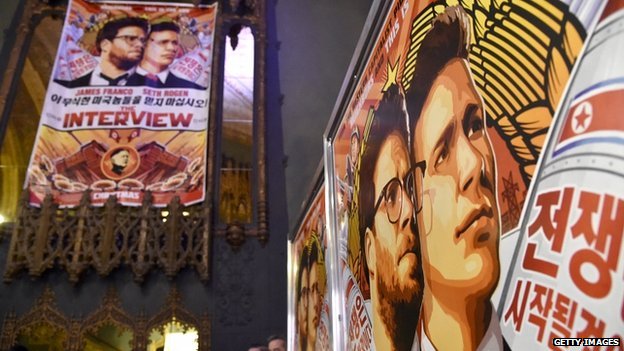
It’s been mostly bad news for Sony in recent weeks, with a North Korea-affiliated hacker group called the Guardians of Peace leaking terabytes of sensitive information, including private emails sent from the accounts of various Sony Pictures Entertainment heads, in response to the studio’s backing of The Interview. And though it’s admittedly bad taste to snoop, we can’t help but be excited at having learned Pascal’s stance on the future of the James Bond franchise.

Fingers crossed this actually goes somewhere, and Elba is able to seal a deal to take on the part. Fans want him, people at Sony want him and the actor himself has acknowledged a desire to do it. So what’s to stop it from actually happening?

Source: http://wegotthiscovered.com/movies/sony-he...

Get To Know: DJ DIRTY HANDS - coming to The Lodge This Saturday 12/20


By Marcus K. Dowling 

Local legend DJ Dirty Hands will be hard at work maintaining his well-respected status at The Lodge at Red Rocks this Saturday night (12/20). With a set that will in all likelihood (as he has) evolve from hip-hop and dive into EDM while still remaining entirely crowd-friendly, he'll showcase why he's likely more important as a top selector and turntablist than ever before. In an era where the Nation's Capital is in many ways experiencing incredible growth and development insofar as the music and nightlife industries, DJ Dirty Hands still maintains an iconic stature. 

If familiar with (or new) to dance music and nightlife and on the fence, here's a few solid reasons that you may not be aware of to check out Dirty Hands' set on Saturday night:

a) He's checked two major achievements by which modern era DJs of all styles and backgrounds are judged. What are they? He's both been a Red Bull Music Academy mentor and an Official NBA All-Star Game party DJ. It's not hyperbole to say that he's rocked with (and for) the best.

b) He's spun at 1 Oak in New York City, DC's infamous Park at 14th, LA's legendary Chateau Marmont and Baltimore's "Get Down" party. Catching him in the more intimate confines of DC's H Street corridor is rare. If a DJ, dance or nightlife fanatic, any of those locales certainly ring bells insofar as providing quality experiences.

c) He's opened the nightspot Heist in DC's downtown Golden Triangle, but as with many DJs across the city, still very interested in what's happening over on H Street, NE. The area is hot right now, and with a top-tier sound system installed, The Lodge at Red Rocks is one of very few venues in the area ideally suited for his set.

DJ Dirty Hands is a DJ's DJ and tastemaker's favorite, locally and nationally. He's cosigned by the likes of DC-to-global mix-master phenom DJ Enferno, with rising names like DC's DJ Brad Piff stating that he always "elevates his game whenever [Dirty Hands] is around." As well, the Washington Post's lifestyle columnist Fritz Hahn remarks, "I remember when [Dirty Hands] was spinning backpacker hip-hop in the '90s; Now he's a party-rocker extraordinaire."

Catch DJ Dirty Hands this Saturday 12/20 at The Lodge At Red Rocks alongside Lodge resident, Sharkey. Music starts at 9pm. No Cover. Heated and covered rooftop. 

Nasa just emailed a wrench to space

When International Space Stationcommander Barry Wilmore needed a wrench, Nasa knew just what to do. They "emailed" him one. This is the first time an object has been designed on Earth and then transmitted to space for manufacture.

Made In Space, the California company that designed the 3D printer aboard the ISS, overheard Wilmore mentioning the need for a ratcheting socket wrench and decided to create one. Previously, if an astronaut needed a specific tool it would have to be flown up on the next mission to the ISS, which could take months.


image.jpg


This isn't the first 3D printed object made in space, but it is the first created to meet the needs of an astronaut. In November astronauts aboard the ISS printed a replacement part for the recently installed 3D printer. A total of 21 objects have now been printed in space, all of which will be brought back to Earth for testing.

"We will use them to characterise the effects of long-term microgravity on our 3D-printing process, so that we can model and predict the performance of objects that we manufacture in space in the future," explained Mike Chen from Made in Space.

Chen also explained the process of sending hardware to space. First, the part is designed by Made In Space in CAD software and converted into a file-format for the 3D printer. This file is then sent to Nasa before being transmitted to the ISS. In space the 3D printer receives the code and starts manufacturing.

"On the ISS this type of technology translates to lower costs for experiments, faster design iteration, and a safer, better experience for the crew members, who can use it to replace broken parts or create new tools on demand," Chen said.

Source: http://www.wired.co.uk/news/archive/2014-1...

The Big Stick Restaurant Opening Today at 5 PM

image.jpg

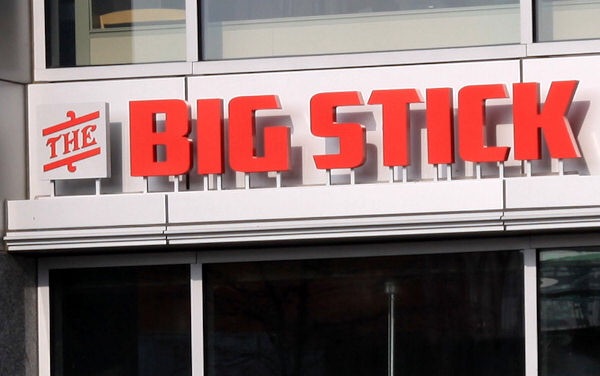
Word has filtered my way that Justin Ross's new venture The Big Stick is opening for business at 5 pm today, Dec. 18, in the ground floor of 20 M Street on the northwest corner of Half and M, SE. 

Justin tells me that it will be a limited menu for the first few days, and of course there's always some kinks to be worked out, but open is open. As we've found out, the menu will be centered around a beer-and-sausages lineup, with other European-type offerings as well.

Believe it or not, this is the first new (non-temporary) retail establishment to open on Half Street, SE since the revival of Near Southeast began in the late 1990s. If you had told me when the announcement of the site choice for Nats Park was made in September 2004 that it would take a decade to see the opening of just one restaurant on Half Street, well, it's fair to say I would not have believed you.


UPDATE: 

We at Joodlum tried Big Stick. No thanks, $15 for this and a side of that many fries? 

image.jpg
Source: http://www.jdland.com/dc/m-index.cfm/4110/...

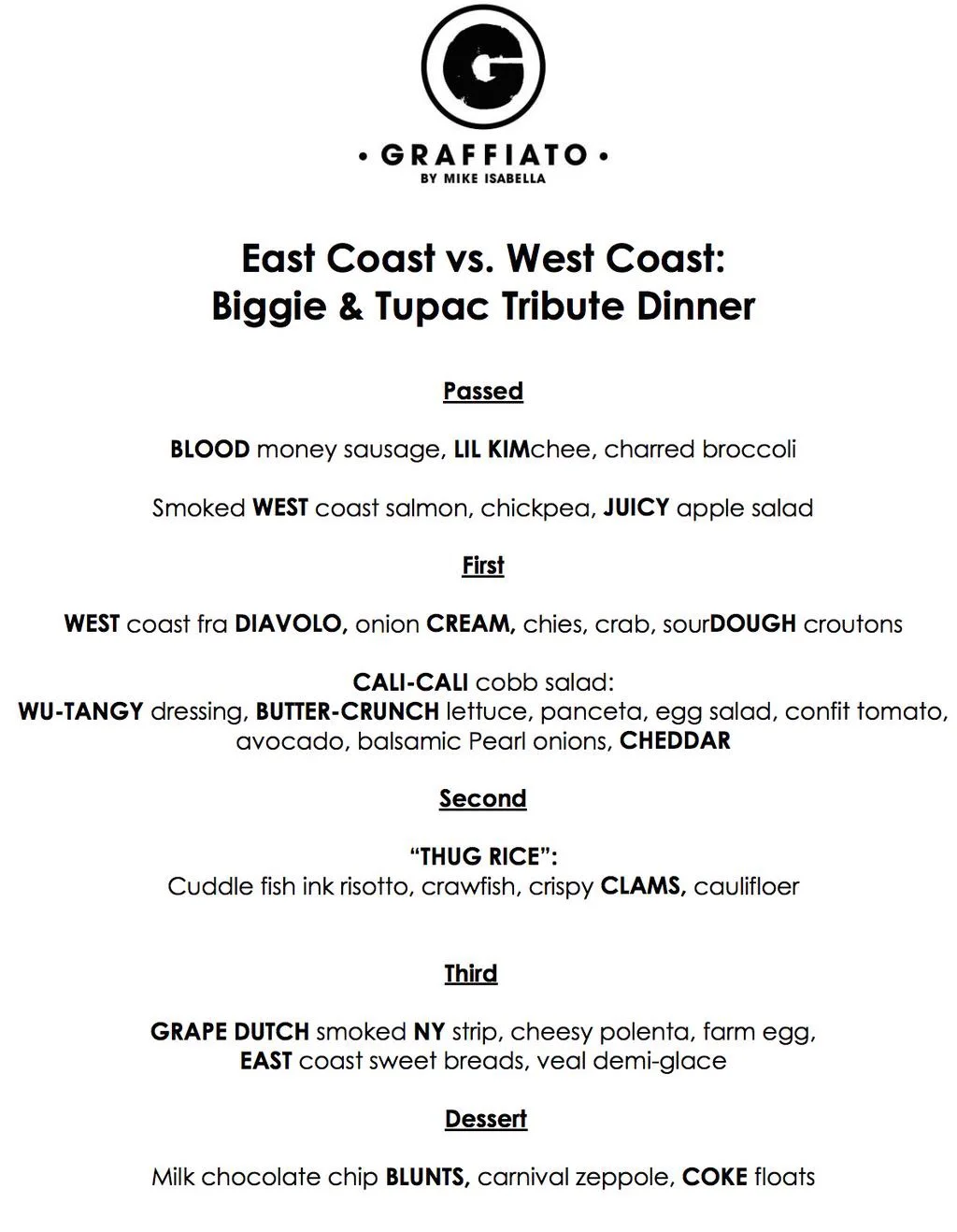
Graffiato Takes Down Hip-Hop Tribute Menu With “Thug Rice” and “Chocolate Chip Blunts”

image.jpg

Graffiato is planning to host a $65 hip-hop-themed dinner on Feb. 2 paying tribute to the East Coast vs. West Coast, Biggie vs. Tupac rivalries of the ’90s. But its menu of "thug rice" and milk chocolate chip "blunts" with "coke floats" hasn't gone over so well.

Several people, including Smith Commons and Smith Public Trust owner Miles Gray (above), have taken to Twitter to call the menu offensive, distasteful, and racist.

Graffiato has since removed the menu from its website. Restaurateur Mike Isabella gave Y&H the following statement via his publicist, who says he's not available for an interview.

"The Graffiato dinner on February 2 is a celebration of hip hop from two of the greatest artists of the 90s. The menu is still a work in progress, and dishes will be inspired by songs, lyrics and classic east and west coast dishes."


image.jpg
Source: http://www.washingtoncitypaper.com/blogs/y...

Home at last: DC Council passes D.C. United stadium bill

image.jpg

Ten years of starts and stops, ten years of promises made and broken, and ten years of "zzzzzzz" all ended today. The DC Council just now gave final approval to B20-805, the District of Columbia Soccer Stadium Development Act of 2014, which authorizes the Mayor to assemble the land for the soccer stadium and gives the terms by which the District will lease it to D.C. United. There are no longer any promises to break, only law on the books. Having been here all along, United will finally have a place to call their own.

The passed bill is structured in three parts: an introduction about the purpose and benefits of building a soccer stadium on Buzzard Point, amendments to the development agreements D.C. United ad Vincent Gray signed last year, and amendments to D.C. United's current lease at RFK Stadium to make it applicable to the new stadium. If you want to read all the nitty gritty details, you can find the version passed on December 2 on the Council's website; the Council did make some minor adjustments in the language to clarify certain things, but it is almost exactly the same. Mendelson then moved the stadium funding to immediately after the plan vote, and we will update this post with that result.

Source: http://www.blackandredunited.com/stadium-n...

Art group signs lease for DuPont underground


After years of negotiations, the Arts Coalition for the Dupont Underground (ACDU) has signed a lease for the subterranean space under Dupont Circle with the DC government.

The group announced the signing of the 66-month lease on Tuesday, along with a crowdfunding campaign with a goal of raising $50,000 to jumpstart the project. The group plans to start by cleaning up the former trolley station’s east platform and opening up the space to the public to help build momentum for a redevelopment project.

“The plan is to clean up the space, then open it up to the public,” said Julian Hunt, an architect who helped negotiate the lease, in a news release. “We want to demonstrate what uses are best suited for the long-term.”

The group was somewhat vague about their short-term plans for the space — much of the talk for the Underground has focused on what it could become in the long-term. The ACDU says it will begin by “activating the space through art- and design-related events, public performances and other gatherings, as well as temporary commercial uses,” presumably on the renovated east platform.

The ACDU won a request for proposals back in 2010 to develop the space. Since then, they’ve been trying to make their vision for a lively underground space — complete with a gallery, winery, restaurant and even a hotel — become a reality. The 75,000 square foot underground space has been vacant since 1963.

Patrick Pendelton Smith, who spoke to UrbanTurf earlier this year about his plans for a micro-hotel for the Underground, was hired by the project to be its director of real estate development. Smith told UrbanTurf earlier this year that he believes commercializing some of the space is the only way the project can be viable.

“Running all the numbers and saying, ‘This could be financially viable,’ and the arts that are involved — it’s just crucial to this project,” Smith said. “By having this hotel component and tying it in with the arts, you activate the space and bring in money from outside the city. It’s an economic win for the city and the neighborhood.”

image.jpg
image.jpg
Source: http://dc.urbanturf.com/articles/blog/arts...

Bush cancels trip to avoid torture arrest

image.jpg

Former U.S. President George W. Bush has cancelled a visit to Switzerland over fears he could have been arrested on torture charges.

Mr Bush was due to be the keynote speaker at a Jewish charity gala in Geneva on February 12.

But pressure has been building on the Swiss government to arrest him and open a criminal investigation if he enters the country.

Criminal complaints against Mr Bush alleging torture have been lodged in Geneva, court officials said.

Human rights groups said they had intended to submit a 2,500-page case against him in the Swiss city tomorrow for alleged mistreatment of suspected militants at Guantanamo Bay. 

Left-wing groups have also called for a protest on the day of his visit, leading organisers at Keren Hayesod's annual dinner to cancel Mr Bush's participation on security grounds.

The New York-based Human Rights Watch and International Federation of Human Rights (FIDH) said the cancellation was linked to growing moves told him accountable for the use of torture, including waterboarding.

He had admitted in his memoirs and TV interviews to ordering the use of the interrogation technique which simulates drowning. 

Reed Brody, a lawyer for Human Rights Watch, said: 'He's avoiding the handcuffs.'

The action in Switzerland showed Mr Bush had reason to fear legal complaints against him if he travelled to countries that have ratified an international treaty banning torture, he said.

Mr Brody is a U.S.-trained lawyer who specialises in pursuing war crimes, including Chile's late dictator Augusto Pinochet and Chad's ousted president Hissene Habre.

Habre has been charged by Belgium with crimes against humanity and torture and is currently exiled in Senegal.

He said: 'President Bush has admitted ordering waterboarding which everyone considers to be a form of torture under international law.

'Under the Convention on Torture, authorities would have been obliged to open an investigation and either prosecute or extradite George Bush.' 

Swiss judicial officials have said that the former president would still enjoy a certain diplomatic immunity as a former head of state. 

Dominique Baettig, a member of the Swiss parliament from the People's Party, wrote to the Swiss federal government last week calling for his arrest if he came to the neutral country.

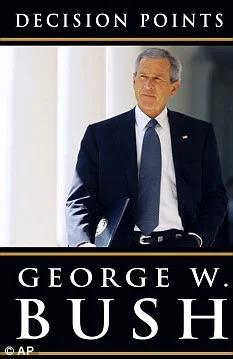
In his 'Decision Points' memoirs, Mr Bush strongly defended the use of waterboarding as key to preventing a repeat of the September 11 attacks on the U.S. 

Most human rights experts consider the practice a form of torture, banned by the Convention on Torture. 

Switzerland and the U.S. are among 147 countries that have ratified the 1987 treaty.

Source: http://www.dailymail.co.uk/news/article-13...