
Three New Alcohol Laws Go Into Effect in D.C.
Three new alcohol laws go into effect in D.C.
(WJLA) - Good news for businesses that sell alcohol -- and the people who love to consume it -- was handed down in D.C. on Thursday.
The D.C. government announced that three new laws are now in effect for businesses that sell or serve alcohol in the district.
According to a press release, any ABC-licensed restaurant, tavern, nightclub, hotel or multipurpose facility that has a class C license can now apply for a "distillery pub permit" from the Alcoholic Beverage Regulation Administration (ABRA). The permit will allow an establishment to manufacture, distill and store craft liquors such as gin and vodka on the premises or in an area immediately adjacent to the business.
The law, known as the Distillery Pub Licensure Act of 2013, also permits licensed businesses to sell the liquor they produce to patrons, for consumption both on or off the premises, between the hours of 7 a.m. and midnight. Liquor intended for off-premise consumption must be sold in sealed containers.
Alcohol may also be sold to wholesalers for resale to other ABC-licensed businesses within the district.
ABC-licensed businesses can apply for a distillery pub permit, which costs $7,500, at the ABRA offices, located at 2000 14th St. NW.
Another new law now in effect, the Manufacturers' Sunday Sale Act of 2013, allows manufacturers to sell and deliver alcoholic beverages from 7 a.m. to midnight, seven days a week. Previously, the sale of alcohol to wholesalers, retailers and consumers was prohibited on Sundays.
Manufacturers are also gaining four additional days per week to conduct product tastings. The Manufacturer Tasting Permit Act of 2013 allows an alcoholic beverage manufacturer that has a tasting permit to conduct tastings seven days a week, from 1 to 9 p.m. Previously, tastings were only allowed Thursday through Saturday.
All three laws were recently approved by the D.C. Council and signed into law by Mayor Vincent C. Gray.
Read more: http://www.wjla.com/articles/2014/03/three-new-alcohol-laws-go-into-effect-in-d-c--100867.html#.Uxj2t0Ff8q4.twitter#ixzz2vDzKHOyO

Because Calabasas Hasn't Suffered Enough.
TMZ Reports...

Justin Bieber's Calabasas neighbors can finally breathe a sigh of relief ... because the Biebs is moving out -- after scoring a million dollar profit from the new buyer ... Khloe Kardashian.
We broke the story ... Bieber decided to move out of Calabasas in January after numerous run-ins with neighbors and law enforcement -- where he felt trapped in his own home -- and now he dumped it off on Khloe.
Bieber bought the house in 2012 for just over $6 mil. Real estate sources tell TMZ ... Khloe bought the home for $7.2 million.
As for Khloe ... she sold her Tarzana estate to "Big Bang Theory" star Kaley Cuoco for $5.49 mil.
The move makes sense for K.K. -- her sister Kourtney recently purchased the nearby home of Keyshawn Johnson ... who had his fair share of beef with J.B.
We're told Khloe will do some remodeling, because Justin's 19-year-old taste doesn't suit her.
He's all yours Atlanta!

Angelina Jolie: My daughter was the only kid NOT scared of 'Maleficent'
When Angelina Jolie told her kids she was thinking of playing the live-action version of Sleeping Beauty’s villainess in Maleficent, her six children all had the same response: NO!
“They went, ‘She’s so scary!’” Jolie tells EW this week, in her first in-depth interview about the film (out May 30).
Only Vivienne, one of her and Brad Pitt’s youngest children, proved not to be scared by the intimidating black horns and icy cackle. The now-5-year-old even ended up playing a young version of Princess Aurora in the film (as seen in this exclusive new image). But that casting was done more out of necessity than ambition.
“We think it’s fun for our kids to have cameos and join us on set, but not to be actors. That’s not our goal for Brad and I at all,” Jolie says. “But the other 3- and 4-year-old [performers] wouldn’t come near me. It had to be a child that liked me and wasn’t afraid of my horns and my eyes and my claws. So it had to be Viv.”
To convince her brood of little ones that mom should take the part, the actress says she gathered them together for story time to explain the fantasy film’s take on the self-proclaimed “Mistress of All Evil.” By the time she detailed the character’s new origin, there was definitely sympathy for this devil.
“I said, ‘Let me tell you the real story but you can’t tell anybody,’” she recalls. “So this was my test too, like any parent. The next day, I heard Shiloh getting into a fight with another kid, defending Maleficent, saying, ‘You don’t understand her!’ They got into a bit of an argument and I thought, that’s the reason to do the film.”
It’s not that Maleficent is justified, but this story shows how she became misguided. “When that character makes mistakes — which Maleficent does, and crosses many lines — you want them to be angry at her and concerned and confused and in the end, somehow understand something that they didn’t know before,” Jolie says.
It still took awhile for the older kids to get used to her malevolent new appearance, though.
“When Pax saw me for the first time, he ran away and got upset — and I thought he was kidding, so I was pretending to chase him until I actually found him crying,” Jolie says. “I had to take off pieces [of the makeup] in front of him to show him it was all fake and not freak out so much.”
Eventually they got used to it. Pax and Zahara also turn up as extras in the famous christening scene, when Maleficent appears to place the sleeping curse on the kingdom’s infant princess. “I had to walk by them being very mean,” Jolie says. “Of course, I wanted to stop and wink at them.”
Jezebel tries the BroApp
Jezebel tries the BroApp
Every day on my way to work, I spend the entire train ride deleting inane press releases from my email inbox. Diet pills? Delete. A series of seminars on how to convince your boyfriend to propose? Delete. The launch of a new cake flavored vodka made especially for tampon soakage? .... Archive. But the other week, one press release intrigued me enough that it cut through the noise. It was for an app designed especially for bros who were interested in both placating their girlfriends and chilling with their bros without damaging their brocred.
The app was called BroApp, and, for the low cost of $1.99, it promised to automatically text a bro's girlfriend at an appointed time every day, freeing users up to spend "more time with the bros." The video explains how it works pretty well.
Note the inclusion of "Germaine Greer" and "Hermione Granger" among the ad brotagonist's contacts. Pretty great Easter Egg, dudes.
I am neither a bro, nor do I have or want a girlfriend, but the existence of this app intrigued me. Would an app like this convey to my loved ones that I care? Or would they see right through my programmed attempts to maintain intimacy? I decided to try it out on my friend and coworker Kate Dries.
I told her what I was going to do before I did it, that I was going to tell BroApp that she was my girlfriend and that she was going to get preprogrammed texts from me at a certain time every day. She acquiesced, and after a quick installation and setup of the app on my phone, the great experiment began.
At first, I didn't realize that users could program their own text messages into the app rather than relying on the app's prefab options — which are almost violently bland — and so 24 hours later, Kate received her first text from me and BroApp, which the app selected at random from the list of acceptable options I'd designated. She'd already forgotten about the experiment and was thus understandably disturbed.
I'd like to say that things between me, BroApp, and my BroApp girlfriend Kate got better. But they most certainly did not.
I realized that I'd have to step up my game to appear more thoughtful. So I changed the time that Kate would receive the messages to on or around 12 noon, an easy toggle in the app's settings.
She was still incredibly creeped out, and definitely did not appreciate being called "darl," which is the pet name that BroApp has decided that Bros give their girlfriends.
I realized — too late — that the app allows users craft texts that are more a reflection of the sending bro's individuality, so I added some texts to the list from which the app would draw in the hopes that Kate would understand how much I care ("Have a blessed Lord's day," to be sent on Sundays only, and "3=====D~~~" which I told the app could be sent on any day of the week). But by this point, the app had already suffocated her with its insincerity. She was having none of it.
After today, I will be Bro-breaking up with Kate. As hilarious as it's been to freak her out for the last week, I'm not a monster.
BroApp isn't a terrible idea in theory; the problem with it is that if you're close enough with someone to call them a close friend or romantic partner, they'd see through it from a mile away, unless you and your partner are literally the most boring people in the world. Kate says the app freaked her out because it seemed so impersonal (also, it's weird when your coworker calls you "babe" and "darl." I don't even hug people unless under duress; I wouldn't assign pet names to anyone unless threatened with blackmail). And if a user wants to head the insincerity off at the pass and make the app into something that reflects their own individuality, the amount of effort it takes to program all new texts into the app and then set specific days on which the texts should go out is about the same as just, you know, manually texting someone once a day to let them know you're thinking of them.


I did appreciate BroApp for a few things, though. First, the app only allows users to program in one "girlfriend" at a time, which means that the app is anti-being-a-shithead (yes, yes, I know that there are plenty of happy self-actualized people in fulfilling polyamorous relationships, but there are far more shitheads who cheat on their girlfriends). The app's literature doesn't nudge-nudge-wink-wink shitheadery, either; it just seems like the sort of tool designed for the modern self-identified bro who might forget to do something he knows he should do from time to time. It's another step in the evolution of the meaning of the word "bro," which in recent years has gone from being synonymous with "date rapey college douchebag" to "floppy, happy, kind of boring guy who just wants to have fun and doesn't mean to hurt anyone in the process." Like a human labrador retriever.
So I know I'll never use BroApp to communicate with anyone who I see on a daily or weekly basis or who I think about or talk to a lot in the course of my everyday comings and goings. But you know where something like BroApp would be completely, almost miraculously useful? Communicating with my mother.
My mother, who is great and who I love very much, has an uncanny knack for, from halfway across the country, texting me at the exact times when there's no feasible way I can talk. While I'm running. When I'm about to go into the subway. When I'm having an IRL conversation with a person who is physically with me. During a brunch showing of The Great Muppet Caper. Leaving all maternal communication to an app would be cruel and kind of awful, but programming BroApp to text my mom something every afternoon will prompt her to text me back, which will remind me, every day, to make an effort to talk to her so she doesn't think her oldest child has forgotten all about her or been eaten by rats. Which I'm pretty sure are legitimate concerns that my mother has about me.
Using an app designed to foster deeper romantic connections between boring people to communicate with my mother is not in the spirit of BroApp, but it's better than nothing. Besides, I paid two bucks for the thing. I've got to get some use out of it besides making Kate hate me a little. After she received her final BroApp message, she texted, "Maybe the lesson here is less about broapp and more about how you'd be a shitty boyfriend."
Maybe indeed, darl.
The ramen taco has finally arrived
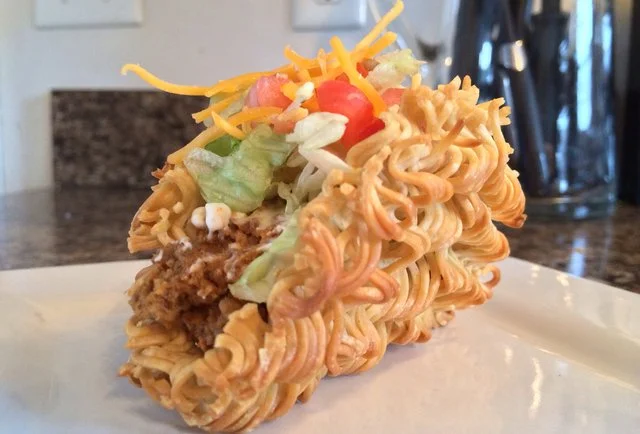
Realizing that the ramen burger and its Italian cousin, the 'Roni Roll, were lacking a little South of the border flavor, the good folks at The Vulgar Chef have unleashed the ramen taco. In a move that makes Doritos Locos look coy, it ditches the shell for noodles stuffed with beef, lettuce, tomatoes, cheese, and sour cream. Go pay your respects to this noble frankenfood while we work on gathering any and all updates on its current whereabouts.
Via thrillist

H Street Project Could Break Ground in a Year, Offer Large Apartments
Douglas Development is moving forward with plans for a mixed-use project at 501 H Street NE (map) and hopes to break ground in the first quarter of 2015.
“If I broke ground in 12 months, I’d be very happy,” said Douglas’ Paul Millstein on Wednesday prior to presenting the project to the ANC 6C planning and zoning committee meeting. Millstein added that the project would take roughly 12 months to build, putting its delivery in the first quarter of 2016.
Douglas is proceeding with a Planned Unit Development (PUD) request for the Zoning Commission, which generally gives developers more zoning flexibility in designing mixed-use projects.
The original plan for the development called for 32 units, but that number could be reduced to make room for a few bigger apartments in the building. In talking with some of the project’s neighbors at community meetings, Millstein said, “quite a few families up in the Capitol Hill area want to stay in the city, aren’t ready to buy a home, need two-bedrooms or three-bedrooms, and there’s not that much product.”
The finished product will also include three floors of retail: one below-grade, another at ground level and a third above-grade. Together, the space will comprise 28,000 square feet, which Millstein said will be structured in as flexible a way as possible — meaning several tenants may ultimately end up in the building. Douglas had previously floated something “like” a Crate & Barrel or a Forever 21 for the space, but Millstein clarified on Wednesday that the developers are really just seeking tenants comfortable with multi-level layouts.

Our Supercomputer Overlord Is Now Running A Food Truck
These days, there's a lot of pressure on chefs to think up the most fantastical, cutting-edge dishes. We live in an age of cronuts, and pecan pie .
Yet even the greatest of culinary masterminds are merely human, at the end of the day. And strokes of genius can be few and far between.
That's where IBM's supercomputer, Watson, comes in. Watson, you might remember, crushed it on Jeopardy! . Since then, researchers at IBM have teamed up with the Institute of Culinary Education in New York. They've re-programmed Watson to serve as a sort of sous-chef that can spit out novel ingredient combinations and recipes on command.
The IBM researchers call it "creative computing." Chefs can specify a key ingredient and a cuisine, and IBM's computer program will come up with millions of ideas.
So far, the has generated dishes like Swiss-Thai asparagus quiche and Austrian chocolate burrito. IBM served both out of a food truck that it debuted at a Las Vegas tech conference last week. They may sound like strange flavor combinations, but human taste testers have deemed them delicious. The truck's next stop is Austin, where it will be serving up more of these unorthodox dishes at the South By Southwest music festival.
"The goal is to help chefs figure out combinations they would not have thought about," says , one of the IBM researchers behind the technology.
Chefs usually think about pairs of ingredients when pondering new tastes and combinations, Pinel tells The Salt. Occasionally, they'll think about three flavors that might work well together.
By contrast, "the computer can go through trillions and quadrillions of possibilities," Pinel says.
The chef starts by suggesting a main ingredient — say, lobster. The program then goes through its huge database of recipes and ingredient profiles, looking for other ingredients known to pair well with it in different global cuisines. The program evaluates the chemistry of the food and models human perception to try to predict which ingredient pairings will prove tasty and surprising. (One dish it came up with: a Cuban-style lobster bouillabaisse with squash.) This video explains how it all works in more detail:
Adorably Perplexed Kids React to Rotary Phones (Its less adorable when the 20 somethings do it)
If you are a person of a certain age, you remember what it was like to use a rotary phone—the slow process of dialing, the weird clicking sound the wheel made. These kids in the latest video from Benny and Rafi Fine are too young for that. Watch how adorably perplexed they are when this relic is placed in front of them.
"Say what? How does this even work?" one asks. "My iPod is not like this." Another says that this is one of the very first phones that Alexander Graham Bell invented. (More likely it's from the late '70s or early '80s.) Yet another says that he knows this is a phone "because I read history."
It probably goes without saying that they'd be similarly confused by the sound of a dialtone. Feel old? Yeah, me too.
Via Mental Floss
Woman hater and fat-shaming author Mary 'Fugly' Smart has an AWFUL Book, Angled at Fox Viewers
I wouldn't even buy this book to burn it.
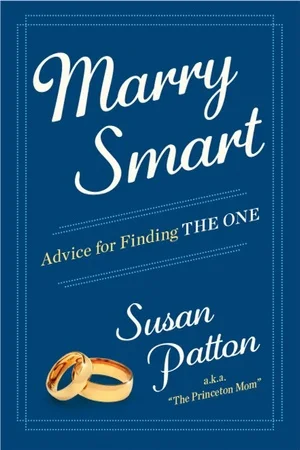
Patton and her mom-splaining schtick came to hate-read fame with a letter to the editor to The Daily Princetonian last year, in which she advised the university's women to find a husband while in college or else be doomed to the life of a spinster. Men, she reasoned, "regularly marry women who are younger, less intelligent, less educated," but Princeton women — and by extension, all college women — should find an equal match. And quickly at that. The largely negative response from that viral article won her a book deal and a Valentine's Day op-ed in The Wall Street Journal.
What wisdom does Patton have to dish out now, many months later? Lots of fat-shaming, according to an early view of the book by The Daily Princetonian. “Answer honestly … would the man you’re dating push his meatball to your side of the plate?” Patton writes. She also has a nickname for heavy-set people: “A plopper. A big lump that goes plop! A grossly overweight person.” How creative!
In Patton's calculation, women can only get married to an intellectual equal if they are also attractive, so there's only one solution for overweight people: “If you’ve struggled with obesity through most of your teen years, then maybe surgical intervention is a good idea for you,” she advocates.
Those are just a few of the many rage-causing quotes from Marry Smart, due out next week. Patton also takes aim at women who are victims of sexual assault: A provocatively-dressed drunk woman who enters a man's room is responsible for her actions, she writes. “Please spare me your ‘blaming the victim’ outrage,” the book reads, as these women “displayed screamingly bad judgment and must bear accountability for what may happen next.” Saying "spare me" is unlikely to negate the fair outrage at that victim-blaming line.
Men are not spared in her formulation, either. “Men are wonderful!” she writes, while explaining that they will date any “dumb, mean or nasty” women who freely have sex with them. “For men, there is very little that trumps free sex with a woman who is easier to make than a peanut butter sandwich,” she writes.
Via The Wire
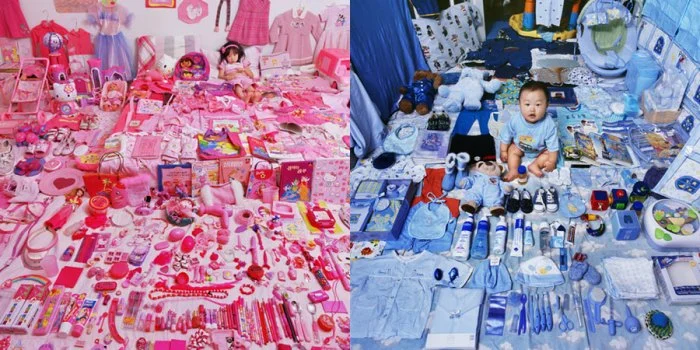
Beyond Pink & Blue
We are obsessed with gender. In the hospital, babies are given a pink or blue blankets. They come home in pink or blue car seats that get clicked into pink or blue strollers, and they sleep on pink or blue sheets in pink or blue rooms. Boys doze cuddled up to stuffed cars and trains, and girls have their “My First Baby” doll waiting in their nurseries.
We do a lot to ensure that other people recognize the gender of our children. Notice all of the baby boys sporting “Daddy’s Little Man” onesies and girls wearing “Daddy’s Princess” bibs.
Once children enter preschool and then elementary school, the emphasis on gender increases. They enter their first classroom and see birthdays listed on the bulletin board with pink or blue faces. They line up boy-girl-boy-girl.
And the teacher greets them with, "Good morning, boys and girls."
This labeling, sorting, and color-coding by gender happens so frequently, you probably don't even notice it. You may even assume that it doesn't matter. Many parents say, "I encourage my girls in math. I teach my boys to be thoughtful. I am not passing along stereotypes. So what if I say 'What a smart girl!'"
Not so fast. Rebecca Bigler, a professor of developmental psychology at the University of Texas at Austin, has spent much of her career showing that simply labeling a group leads children to develop stereotypes about those groups. Early in her career, she conducted an experiment with a group of elementary-school teachers and their students. Half of the teachers were told to use gender to label, sort, and organize the classroom. They had a pink bulletin board for girls and a blue one for boys; each child’s name card was written in either pink or blue; and children always lined up boy-girl-boy-girl. The teachers would say, “The girls are doing a great job today,” or, “The boys are being good listeners.”
One important part of this experiment, though, was that teachers had to treat boys and girls equally. If boys were allowed to pass out scissors, girls had to be allowed to pass out glue—no favoritism or competition allowed. They also couldn’t express any stereotypes. Boys were never asked to be “big and strong” and lift the desks; girls were never asked to sweep the floors. The teachers simply had to “use gender” to sort, label, and classify. In other words, it was a typical, ordinary classroom.
The other half of the teachers in the study were instructed to completely ignore the gender of their students. They used individual names when referring to children and always treated the classroom as a whole. There were no comments like, “What a smart girl," or, “I need the boys to settle down." Instead, they said, “Lauren, you are being a great helper” or “Tommy, what a good learner you are!”
What did Bigler discover after teachers managed their classrooms like this for four weeks? Students in the gender-labeling classes developed stronger gender stereotypes than those in the individual-focused classes.
What does it mean for children to develop stereotypes? Does it really matter?
In Bigler’s research, developing stereotypes meant that students in the gender-labeling classes were more likely to say that “only men” should have certain jobs, like construction worker, doctor, or president of the United States. They said “only women” should be a nurse, house cleaner, or babysitter. They also said that “only women” can be kind, gentle, and take care of children.
Pause a moment and reflect on this. This is extremely important.
After just four weeks of simply hearing their gender mates labeled and sorted into girl and boy groups, elementary-school children, both boys and girls, were more likely to say that only men can be doctors or the president of the United States and only women can be nurturing and kind. Parents who want their daughters to aim high in their careers should take note, as should parents who want their sons to become nurturing, caring fathers.
Developing a gender stereotype also means that students in the gender-labeling classes perceived less variability within each group. They were more likely to say that “all” of the boys acted one way or “none” of the girls acted another. In other words, by having teachers simply focus on their gender instead of their individual characteristics, children began to overlook that there were, indeed, individual variations within male or female groups.
Why does this matter? For one, it is simply wrong. There is absolutely no behavior that all boys or all girls do, not one.
But more importantly, if your child is different from the norm in any way, you as a parent do not want them to feel like a failure or a misfit. If kids believe that “all boys like sports” (something they are more likely to say after four weeks in the gender-labeling class), imagine what life is like for the boy who doesn’t like sports, can’t throw a ball, or throws “like a girl." Studies show that other kids will tease him, and his self-esteem will take a hit. Through no fault of his own, he will get treated poorly, simply because his peers think all boys or all girls should act a certain way.
That is a high price to pay for the convenience of having pink and blue bulletin boards.
Via Psychology Today

Dark Chocolate Is Good For You - And Now We Finally Know Why!
Dark chocolate is one of the most delicious substances known to man, and it has the added benefit of being fairly good for you in moderation. A study led by Diederik Esser from Wageningen University in the Netherlands has shown that ingesting dark chocolate can actually improve vascular health. The results were published in The FASEB Journal.
Before we go any further, it needs to be made quite clear that studies referring to the benefit of dark chocolate are not talking about your average Hershey’s bar. Typical candy bars have a low cocoa percentage and much larger amounts of sugar and fat, which negate any incurred health benefit, if not actually making it worse. The chocolates with the highest cocoa mass content are typically more bitter than sweet.
The forty-four study participants were all middle-aged men who were overweight. Each day for two weeks, they were given 70 grams of chocolate. Though the percentages of cocoa were the same, one chocolate had a higher amount of flavanol, while the other was made regularly.
After the study’s completion, participants were found to have an increased flexibility in their arteries, which is likely staving off atherosclerosis and improving blood flow. The increased level of flavanol did not have any benefit in this study; it just added an extra bitter taste to the chocolate, which made the participants not want to eat it.
The research team hopes that a pill could eventually be produced that targets the best parts about dark chocolate, with more consistent outcomes and less confusion about how much to ingest for the maximum benefit.
Critics of the study argue that these conclusions cannot be asserted with only 44 participants. Additionally, at the onset of the experiment, the participants were instructed to avoid certain calorically-dense foods that would have caused additional weight gain. This opens the possibility that the change in diet may have impacted heart health more than the chocolate.
Read more at http://www.iflscience.com/health-and-medicine/dark-chocolate-good-you-and-now-we-finally-know-why#pdy3zCMoFpEi7W3G.99
The hotel minibar may soon be extinct, experts say

Is it time to say goodbye to the hotel minibar?
A recent survey by the travel website TripAdvisor.com found that the hotel minibar was the least important amenity for U.S. travelers. Only 21% of travelers ranked the mini-bar as an important amenity, compared to 89% who called free in-room wireless Internet the most important.
There is little financial reason to keep minibars. Hotel consulting firms estimate that minibars generate no more than 0.24% of total hotel revenue, with much of that eaten up by the cost to check and restock the bars.
Companies that build and sell automated minibars that electronically charge guests when a drink or snack is removed from the bar say they can cut the labor costs by up to 60%.
Still, industry experts say minibars won’t be around for long.
Many hotels don’t offer them because of the hassle of restocking and the disputes with guests over minibar fees, said Lynn Mohrfeld, president of the California Hotel and Lodging Assn.
“They are a very difficult amenity to manage,” he said.
But the future of minibars is bleak mostly because of social trends that have pushed travelers into the lobbies to socialize and surf the Web instead of sitting alone in their rooms eating minibar food, said David Corsun, director and associate professor at the Knoebel School of Hospitality Management at the University of Denver.
It’s the same reason some hotels are eliminating room service and beefing up the food and drink offerings in the lobby, Corsun said.
“People are migrating out of their rooms rather than being in the rooms,” he said.
VIA LATimes

The Best Time To Book A Plane Ticket, According To New Study
Finally, there’s a scientific answer to that magic number of days before a flight when tickets are at their cheapest.
The answer? Are you ready? Are you reeeally ready?
Fifty-four days before takeoff is, on average, when domestic airline tickets are at their absolute lowest price. And if you don’t hit 54 days on the head, you should usually book between 104 to 29 days before your trip -- within the “prime booking window” -- for the lowest possible prices. In this window, ticket prices typically hover within $10 of the lowest price they’ll ever reach.
At least that’s what the data from 2013 tells us.
The folks at CheapAir spent the last year analyzing over four million airline trips. They tracked ticket prices from 320 days before takeoff all the way up until the day before, calculating precisely which day each one hit its lowest point.
Air travelers tend to believe they’ll find the lowest of low prices when they book “at the last minute.” This, according to all present data, is one hundred percent false.
The researchers found that, on average, a ticket was at its highest price on the day before the flight. The second-highest price was two days before the flight, the third-highest was three days before… and so on, all the way to 13 days before the flight.
This pretty much solidifies the rule that you should NEVER book your ticket within two weeks of a flight… a mistake that 36 percent of CheapAir users made when planning their trips.
While the researchers found that 54 days was indeed the magic number for booking on average, they’re quick to point out that this isn’t a hard-and-fast rule: your flight’s “best price” window depends a lot on the specific trip you’re taking.
If you’re going somewhere incredibly popular at an incredibly popular time -- like spring break in Florida, for example -- you should book well before the “prime booking window” begins. When there’s constant, strong demand for a flight, the researchers explain, airlines have no incentive to lower ticket prices as time goes on. The same principle holds true for flights to hard-to-reach airports in small cities: there’s little airline competition here, so ticket prices don’t drop nearly as much over their lifespan.
Foreign countries are incredibly popular destinations with hard-to-reach airports, so the researchers suggest booking much earlier than the 54 days recommended for domestic flights.
Here are the “magic numbers” for some common international destinations:
Europe: 151 days before your flight
Asia: 129 days before your flight
The Caribbean: 101 days before your flight
Mexico: 89 days before your flight
Latin America: 80 days before your flight
Happy booking, travelers!
White Noise Machines Could Hurt Babies' Hearing, Study Suggests
Infant sleep machines designed to soothe baby with sound are popular with harried parents, but they could end up harming babies' hearing, according to a new study.

Researchers tested 14 widely available machines that play white noise and other soothing sounds for an article published Monday in the journal Pediatrics. At one foot away, three of the machines produced such intense sound levels at maximum volume that, if played through the night, they would exceed allowable noise limits for adults at work.
"Used too loud or too close or too long, these machines can exceed safety standards and potentially damage the hearing of the infant," Dr. Blake Papsin, the lead researcher and chief otolaryngologist at The Hospital for Sick Children in Toronto, told NBC News.
And those sound limits may be too liberal for infants, whose ears differ from adults', says Papsin. "The infant ear has a little straighter tube. It's a little wider open, and it amplifies the higher frequencies."
At distances of one foot and three feet, the maximum volume on all the devices exceeded the more conservative recommended noise limit for infants in hospital nurseries, and at 6 1/2 feet, 13 of the devices did so.
The study only looked at the potential for harm: No one knows how parents actually use these machines, and there have been no hearing studies of infants exposed to them.
But the researchers recommend that parents play the machines as quietly as possible, as far from the baby as possible, and for as short a time as possible. Or maybe not use them at all.
"None of our sleep specialists recommend them," says Papsin, who suggests that parents address underlying noise issues and help baby sleep by reading books or singing lullabies.
The researchers recommend that manufactures lower the maximum volume, include automatic timers to shut off the devices and insert printed warnings about noise-induced hearing loss.
The researchers did not reveal the names of the tested machines, and several individual manufactures declined to comment. In a statement, the U.S.-based Juvenile Products Manufacturers Association said its members "welcome any and all information that will advance the safety and well being of children" and use that information, when applicable, "in the safety and design of products."
Via NBC
Watch the First Ever Marijuana Commercial To Air On Major Television
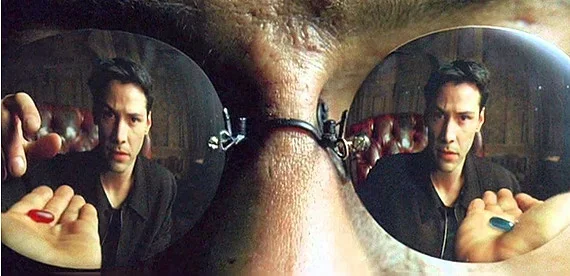
Wachowskis reportedly developing new Matrix Trilogy
Shocking news has just emerged from the internet movie news ether. According to The Latino Review, The Matrix directors Andy and Lana Wachowski are reportedly developing a new Matrix trilogy with Warner Bros.
The Wachowski's already have a long working relationship with Warner Bros., however few of their more recent movies have ever met with the commercial success enjoyed by The Matrix trilogy. With major sci-fi franchises such as Star Wars and Avatar looming in the near future, it looks like Warner want to bring out their own big guns. Apparently, the duo have already begun on the writing process, although there is no word yet on whether they once again be taking on directorial duties.
Unfortunately, this is currently all the 'information' we have, and as is often the case, none of it has come from an official source.
I'm not sure how I feel about this. The original The Matrix was a ground-breaking and incredibly mesmerizing movie, both visually and thematically. In my opinion the sequels, although entertaining, never came close to the original, and in many ways may have even tainted it. Do we really want more of that?
However, although The Matrix was never originally envisioned as being anything more than a single movie, it has since spawned a sprawling expanded universe through comic books, games and animated shorts. With this in mind, there are still plenty of stories to explore.
Personally, I would be interested in seeing a live-action version of the Animatrix (in particular The Second Renaissance story which told of the original war between the humans and the machines), although I suspect they might be planning something original.
Via MoviePilot
Generic Version Of Plan B Emergency Contraception To Soon Be Available No ID Requied Required

Consumers will soon see generic versions of Plan B One-Step on drugstore shelves that will be sold to women and girls of all ages. The US Food and Drug Administration sent letters on Tuesday to two generic manufacturers of the one-pill form of emergency contraception, telling them that they would be allowed to sell their products over-the-counter without a requirement that purchasers show proof of their age.
These generic products will have to be packaged with new labels, however, stating that they are not for use in girls under age 17. That means it may take a few months for them to start appearing in stores alongside condoms, tampons, and Plan B One-Step, which came out from behind the pharmacy counter last July.
“Once a company submits its revised labeling to market a generic version of Plan B One-Step, the agency will work to approve it as soon as possible,” said Erica Jefferson, the FDA’s acting assistant commissioner for media affairs. Older two-pill versions of emergency contraception—taken 12 hours apart—will remain behind the pharmacy counter and can be purchased only by women age 17 and older with valid ID.
Teva, manufacturer of Plan B One-Step, was alerted to the change; it had been granted an exclusivity agreement by the FDA last year after conducting studies to show its product was safe to use in girls ages 15 and over. That agreement, the company hoped, would mean that generic versions of its products would be kept behind the counter for three years with age restrictions.
“The FDA has denied Teva’s request,” Jefferson said. “We determined that Teva’s interpretation of the scope of its exclusivity was too broad.”
Teva declined a request for a comment.
Emergency contraception has engulfed the FDA in a tornado of controversy for several years as women’s rights groups sued to force the agency to make it available over the counter, citing its safety profile and effectiveness at preventing pregnancies in women who have been raped or confronted with a broken condom during sex. FDA officials were ultimately ordered by a federal judge last year to make the product available over-the-counter without any age restrictions.
The FDA consented but only for Teva’s One-Step product.
“This week’s decision means lower cost emergency contraception will be available to women of all ages,” said Martha Walz, president of the Planned Parenthood League of Massachusetts. “As a result, more women will gain access to emergency contraception, and this should reduce the number of unintended pregnancies.”
Plan B One-Step retails for about $50, while the generic versions—Next Choice One Dose and My Way—cost $20 to $35. But the One-Step product label states that it is intended for women and girls 15 and older, while the generic product labels will state that they should be used only by those ages 17 and over.
“I’m very puzzled over this labeling issue,” Walz said. “I don’t know why the FDA would have any differences in labels for a generic” since it’s an identical product to the brand name. Young teenagers reading these labels might be compelled to spend double the amount without realizing that both products are equally safe and effective.
“It’s still going to be confusing for the public,” said Dr. Susan Wood, an associate professor of health policy at George Washington University School of Public Health. Wood resigned from the FDA in 2005 after the agency refused to make Plan B available over the counter. “But it’s another step in the right direction,” she added. “The FDA has gotten itself out of this regulatory tangle.”
In Other Diddy, Rick Ross News: DJ Shot during Diddy/Ross Release Party
he Atlanta Journal-Constitution
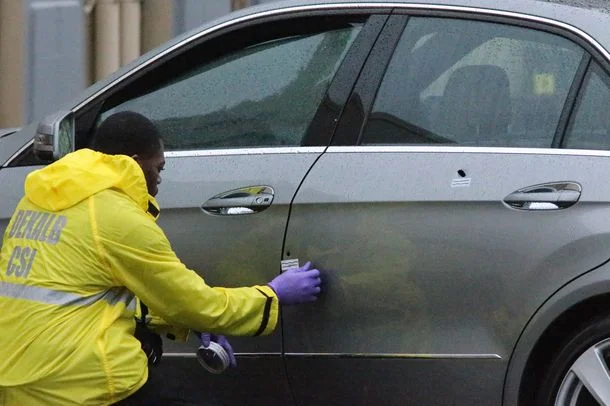
A DJ was shot and wounded early Monday during a shootout with police officers outside a popular DeKalb County nightclub, police said.
The shooting happened outside the Velvet Room, a club in the 3300 block of Chamblee Tucker Road.
The club was hosting an album release party Sunday night for Rick Ross and Sean “Diddy” Combs, according to the Velvet Room’s website.
About 4 a.m., two off-duty officers working at the nightclub heard gunshots in the back of the club, according to DeKalb Public Safety Director Cedric Alexander.
When the officers responded to the rear of the club, “one subject turned toward them, firing shots,” Alexander said. “They returned fire, hitting the subject in the leg.”
The officers were uninjured, according to Alexander.
He said the wounded man, who was identified to investigators as a disc jockey at the club, got up and went back inside the club, where he was arrested before being transported to Grady Memorial Hospital.
“For whatever unknown reasons, it appears that this DJ who was involved in the shooting with some others turned and shot at the officers, and that’s when they returned fire,” Alexander said.
He said the off-duty officers were in full uniform, and identified themselves as officers when they responded to the gunfire behind the club.
“They were doing what they were trained to do,” Alexander told The Atlanta Journal-Constitution. “They took all the necessary actions to protect themselves and each other.”
The officers were placed on administrative duty, standard procedure when an officer is involved in a shooting.
The wounded DJ’s name has not been released.
Alexander said there was “no reason to believe” that any of the celebrities at the club for the album release party were involved in the shooting.
The incident was the second shooting in as many days at a party featuring Combs.
The Central Intercollegiate Athletic Association basketball tournament in Charlotte ended with violence at a party at a hotel that featured the rapper.
Charlotte-Mecklenburg police said two people were shot in the leg early Sunday in a crowded hotel party for some of the thousands of CIAA fans in town.
CIAA Tournament Commissioner Jacqie Carpenter would not talk about the incident because it was not a CIAA-sanctioned event.
Police have not released the names of the victims or said whether they had any connection to Combs or other entertainers at the event. One person was taken to the hospital and the other was treated and released at the scene.
No arrests have been reported. The shooting happened in a gated-off VIP stage area. Some witnesses said three shots were fired.
The party started Saturday night, as the final game between Winston-Salem State University and Livingstone College was being played. The event also included rappers Fabolous and Future
The Velvet Room shooting was also the second officer-involved shooting in DeKalb County overnight.
A Stone Mountain police officer shot and wounded a suspect Sunday night on Ridge Forest Drive in Stone Mountain.
“The officer used force, discharged a firearm,” said Special Agent Brian Whidby of the GBI, which was called in to investigate the shooting.
“The officer was not injured,” Whidby told Channel 2s Action News. “The person shot received non-life threatening injuries.”
Authorities have not said what led to that shooting.
The Associated Press contributed to this article. Via AJC
50 Cent Raises the Stakes in Rapper Beef w/ Diddy and Rick Ross

50 Cent raised the stakes in his beef with 3 rap heavyweights -- publicly insinuating Diddy, Rick Ross and former record exec Steve Stoute are gay together ... but he backed down minutes later.
The shots were fired Sunday -- Fiddy posted the 2 pics on Instagram, one showing a pink-shirted Stoute embracing a pink-shirted Diddy. The other shows Diddy and Rick Ross from an angle that makes it look like they're kissing.
Underneath, 50 wrote the caption, "I ain't saying nothing, but something ain't right. Lmao." He yanked the pics down a short time later.
The photos were the latest in 50's ongoing feuds with the rap titans -- Stoute recently appeared in a VH1 documentary about hip hop, in which he called 50 a has-been. 50's been feuding with Rick Ross and Diddy for years.
As for why he pulled the post ... 50 probably thought twice about starting a nuclear war.