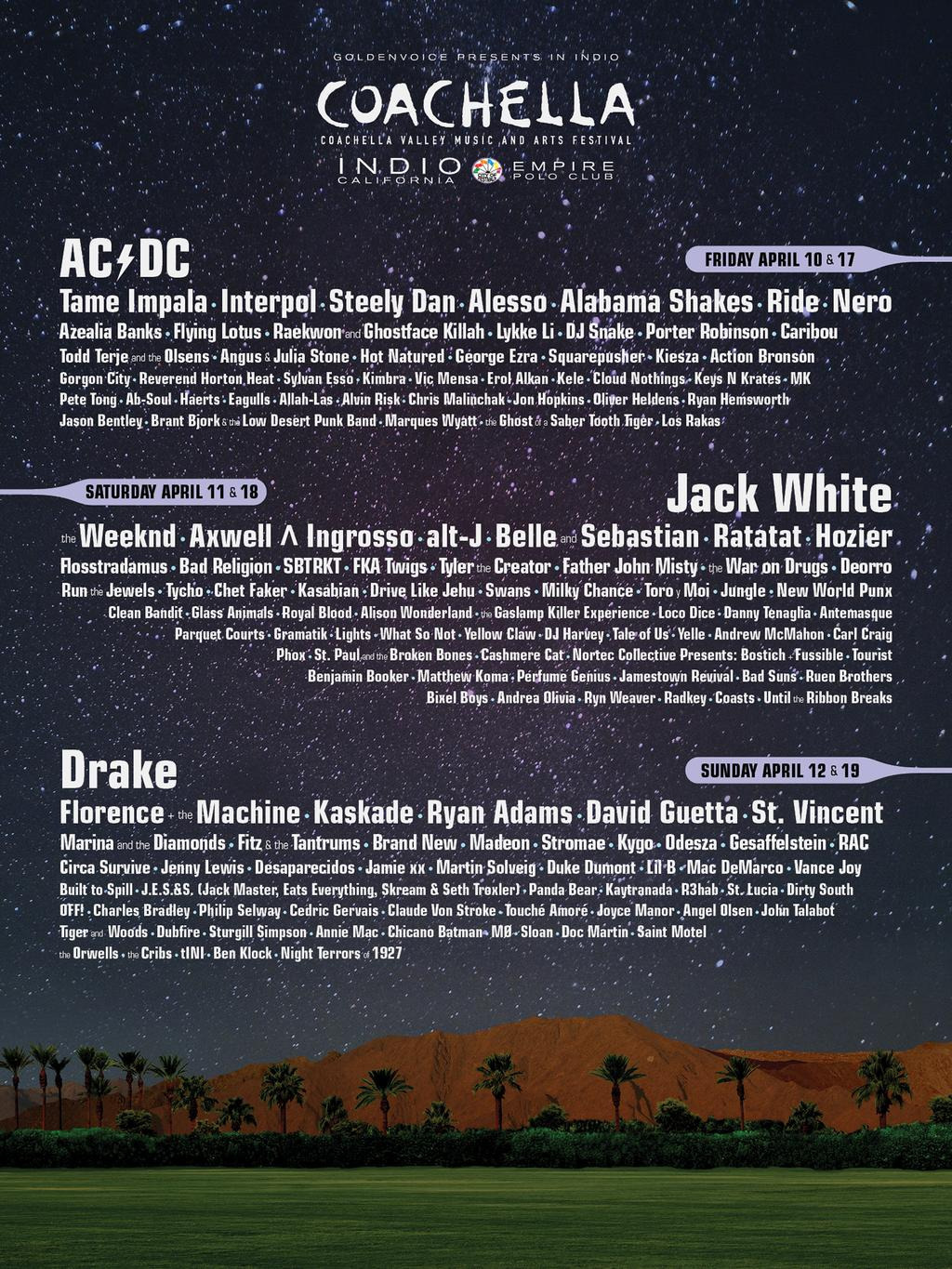
Get To Know: ELI ESCOBAR (NYC) - Coming To The Lodge This Saturday

By Marcus K. Dowling

It's with absolute certainty that we suggest that your favorite DJ at your favorite local nightspot loves Eli Escobar. Representing New York City, he's 20 years into a career that's seen him release a ton of well regarded tracks as a producer, but it's when he spins those tracks (and numerous others) live as a DJ where he's truly succeeded. 

2012's DC-area Redbull Threestyle DJ competition champion, Escobar's opener Spinser Tracy has quickly established himself as a DJ who is adept at seamlessly blending top-40 radio cuts and underground party favorites. A fan of blurring lines between genres, seemingly incomparable tracks have ties thatbecome readily apparent in the midst of his exciting live sets.

Here's three amazing reasons to check out Eli Escobar at The Lodge at Red Rocks...

a) He's not likely to play too many cuts with which you're not completely aware, as he's remixed a truly diverse set of artists and pop favorites including (but not limited to) DiploM.I.A., Britney Spears and Chromeo.

b) Unlike every other DJ you'll probably hear and see of late, Eli Escobar is truly a man of the people in that he absolutely loves requests. Regarding this, he says: "I like requests. Being a DJ and complaining about requests is like being a secretary and complaining about typing."

c) Eli Escobar's long-running Night People NYC party has spawned a similarly named record label. Night People (the party) is currently held at Output in Brooklyn, which for the purposes of DC dance fanatics is yes, the spot that is currently home to Nadastrom and DJ Sabo's NYC version of U Street Music Hall's vaunted Moombahton Massive events. A club described by Resident Advisor as "open to anyone, but is not for everyone" and "[valuing] the communal experience of music over cameras and bottle service," it perfectly describes the vibe of an Escobar DJ set.

It's a quite easy-to-argue statement that Escobar follows in a line of New York City's established standard of excellence that starts somewhere around the early 70s iconic Fire Island discos, navigates its way through The Loft, Studio 54 and the Paradise Garage. In unquestionably keeping that legendary disco and house legacy alive (with a flair for knowing how to seamlessly weave in modern styles, too) Escobar spinning a set at The Lodge at Red Rocks on Saturday January 17th is an absolute must-attend affair. More event details HERE.

Spinser Tracy Photo by Gokateshoot.com

‘Back to the Future’ hoverboard fantasy becomes reality

A technology company in California is turning fantasy into reality.

Hendo Hover has created a real life ‘Back To The Future’-style hoverboard, known as the Hendo. It uses a magnetic force to float 2.5cm off the ground.

Four dinner plate-sized hover engines on the bottom of the board create a magnetic field. This, in turn, creates a secondary magnetic field which, when used over a conductive surface such as metal, enables the board to hover.

The 40kg prototype moves slowly and, according to those who have tested it, is easy to ride.

Kyle O’Neil is one of the engineers working on the project.

“Some people say it’s like snowboarding. Some say it’s like how I imagined a hover board is supposed to be, which is kind of an interesting response because no one’s ever ridden one before”, he outlined.

At the moment, the Hendo can run for around 15 minutes before it needs recharging and it only works over metal surfaces.

The developers dream about creating parks – much like skateboard parks – where people would be able to rent floating boards and ride up and down ramps. The company is also offering developer kits, so independent engineers can find new ways of using the technology.

Co-founder of the company Greg Henderson highlighted the adaptability of the technology used in the Hendo.

“The technology can go in anything. Wherever there’s a wheel, there’s an opportunity.”

The company plans to develop magnetic technologies and licence patents to builders, engineering firms and anyone else who might want to make something hover.

In the future, the creators envision their technology someday being used for trains, transporting large containers and even to raise buildings off the ground during earthquakes.

Source: http://www.euronews.com/2014/11/19/back-to...

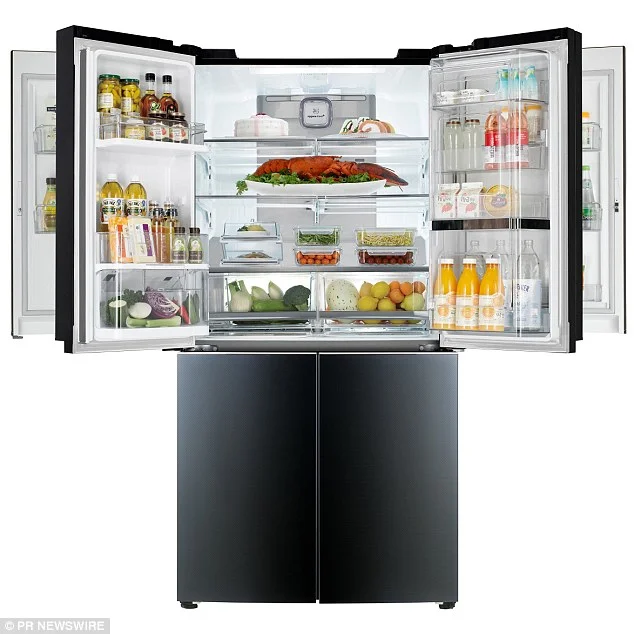
LG launches a fridge WITHIN a fridge: Innovative design means you can hunt for snacks without wasting energy

The ultimate fridge for grazers has been unveiled by South Korean group LG.

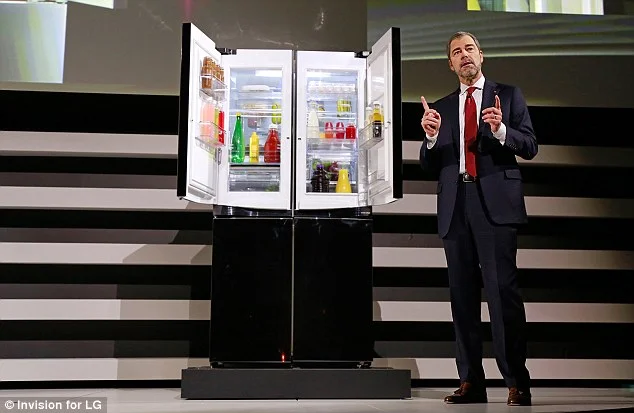
The 'Door-in-Door Mega-Capacity' refrigerator has shelves built into the first set of doors, which then open around a second set of doors, and the main fridge compartment.

Called Model LPXS346C, the new Door-In-Door fridge model has 34 cubic feet of space, and LG claims it stops up to 47 per cent of cold air escaping each time the fridge is opened. 

The latest 'Door-in-Door Mega-Capacity' refrigerator is an upgrade to LG's existing 'Door-in-Door French-door' refrigerator.

It also features LG's Smart Diagnosis technology, which is designed to help LG's call centre staff to identify any problems that arise with the fridge remotely.

An Android smartphone app also allows users to 'record and analyse signals from the refrigerator'. 

The fridge was unveiled at CES in Las Vegas this week, and will be available later this year. There is currently no information on its cost.

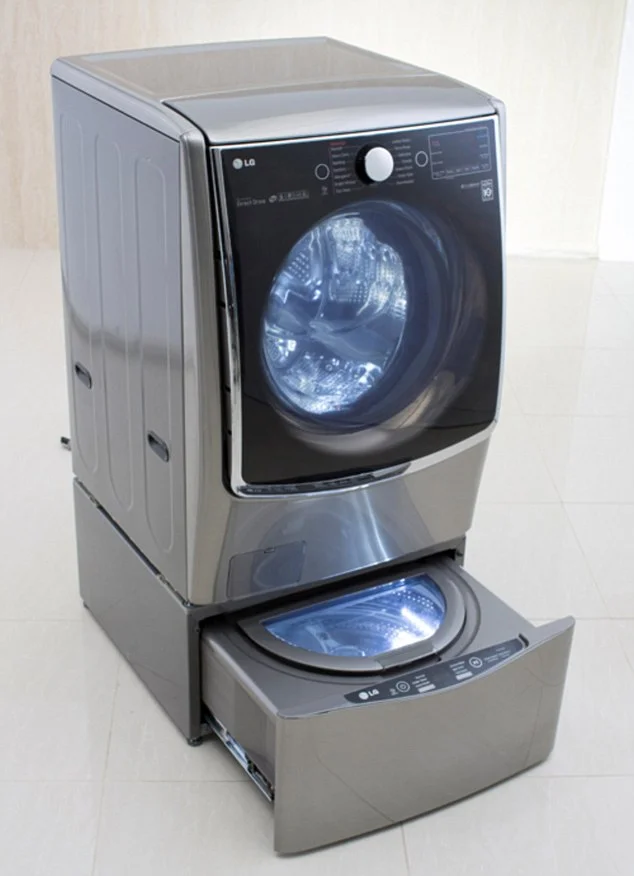
The South Korean company also unveiled a washing machine with two washers that lets people save time and energy by cleaning double the amount of clothes simultaneously.

Homeowners can control the temperature and length of cycles, and set them to start, while they're out of the house using an app. 

It is powered by the mini washer, which LG calls the 'world's first compact washer in a hide-away pedestal, generating a whole new set of washing options.'

For example, muddy gym wear can be separated from whites, or silk underwear can be washed at the same time as towels on a hot wash.

When not in use, the mini washer acts simply as the pedestal for the main washer, but it can also be combined with any of LG's front loading washers. 

The system is Wi-Fi and NFC enabled and is fitted with LG's SmartThinQ technology.


This means users can program cycles using an app, including the temperature and length, while they're at work, or on their way home.

While the NFC tagging technology, means users can download pre-programmed wash cycles to their smartphones, and start them by touching the phone on the machine. 

It also has a Smart Diagnosis feature that helps users to quickly identify issues and faults.

Meanwhile, the South Korean tech giant used the event to announce its next-generation flexible phone, called G Flex 2.

It has a Qualcomm Snapdragon 810 64-bit octa-core processor, with 2GB of RAM.

The 5.5-inch full HD curved display with a 1080 x 1920 pixel resolution and a 403 Pixel Per Inch density.

It runs Android Lollipop and the whole device is said to be 30 per cent more durable than the original model. 

Rob Kerr, mobiles expert at uSwitch.com, told MailOnline: 'From an ergonomic point of view, you can see why a phone with a bend would be more comfortable when making a call, curving from ear to mouth, or when slotted into your back pocket. 

'Ultimately, though, the curved body is more a gimmick than a standout feature. Fortunately, the updated specs mean this smartphone has plenty more to shout about.'


Source: http://www.dailymail.co.uk/sciencetech/art...

Cleaner air con in cars thanks to innovative high-tech device

Breathing cleaner air inside your car – who hasn’t wished for that, especially when standing in a traffic jam?

Through the condensation of water, air-conditioning systems in cars create an ideal environment for the development of fungi, bacteria and other microorganisms, causing allergic reactions in motorists.

Biochemical engineers in Poland have developed a prototype which they say removes contamination in air conditioning units inside cars using the photo catalysis of titanium dioxide to oxidize oxygen.

“The device is installed in the air-conditioning channel in this way. The radiator is outside. Inside, there is a titanium plate where, due to the electrochemical process, nanotubes appear. Thanks to that, the UV diodes lighting the titanium surface with the nanotubes cause a chemical reaction, which leads to the creation of active forms of oxygen that get rid of all the microbiological and odor contamination,” says biotechnology engineer Dawid Sobczak.

The device has been tested in a lab, using a radiator and air channel. According to preliminary tests, it eliminates up to 98 per cent of fungi, bacteria and viruses in the car’s air vents. Its designers say it is so small it can be installed in any type of car.

According to its inventors, similar systems were attempted before but the use of mercury made them too dangerous to be applied in passenger cars.

Source: http://www.euronews.com/2015/01/05/cleaner...

Diabetes: could bacteria provide a cure?

“When you are diabetic, you have to check your blood sugar levels. The doctor tells you to do it four times a day. So you prick your finger. A tiny drop of blood appears. You put it on the tester and within five seconds you get the result,” says Timothée, who suffers from diabetes.
Normally, it’s the job of the pancreas to control the levels of sugar in the blood by producing a hormone called insulin. Insulin is normally secreted by the so-called beta cells, but in people with diabetes, these cells are either attacked and destroyed by the immune system or unable to produce sufficient amounts of insulin.

“Type 1 diabetes is an auto-immune disease where the immune system attacks the beta cells. The cells die and the production of insulin stops altogether. In type 2 diabetes, the beta cells are present in the pancreas but they don’t function properly and no longer produce enough insulin,” says diabetologist Myriam Cnop from the Université libre de Bruxelles.

For the past thirty years, researchers around the world have been trying to reproduce these cells in laboratories in order to study and understand beta-cell dysfunction.

Today, a team led by Professor Raphaël Scharfmann at the French Institute of Health and Medical Research (INSERM) may have found the answer.

“We managed to obtain beta cells from a small piece of human fetal pancreas transplanted onto mice, but the quantities were too small,” he explains. “So we added an immortalising gene to the cells, which then grew inside the mouse. We were then able to remove them from the mouse and put them into a Petri dish. These cells will now be very useful both in order to understand how these beta cells are destroyed or become dysfunctional in some diabetic patients, and maybe one day to help develop new drugs for different types of diabetes.”

Most diabetics today suffer from type 2 diabetes – a disease linked to being overweight or obese, which has grown into a true epidemic and a national health problem in some developed countries.

But help could be at hand thanks to a bacteria called “Akkermansia muciniphila” according to Patrice Cani from the Université catholique de Louvain (UCL) in Belgium.

“We found this bacteria completely by chance,” he says. “There are some 100,000 billion bacteria inside the human intestine, and we’ve known for a long time that these bacteria help digest food, for instance. Here, in this precise case, we were able to show that the akkermansia was able to exchange with our human cells and alter the way our organism uses sugar, to help combat type 2 diabetes.

“So we are currently studying the possibility of giving this bacteria to patients suffering from obesity and type 2 diabetes. And we hope that in a few years’ time we will have the answer to the question: can we give this bacteria in addition to a treatment to combat type 2 diabetes?,” he hopes

Source: http://www.euronews.com/2015/01/06/diabete...