Wine Drinker Suffers $3,750 Sticker Shock at Bobby Flay Steak

image.jpg

He was told his bottle of wine cost "thirty-seven-fifty."

A diner at the Atlantic City, NJ location of Bobby Flay Steak says he was misled into purchasing a $3,750 bottle of wine thanks to an ambiguous message from his server. According to a report on NJ.com, customer Joe Lentini asked a waitress at Bobby Flay Steak to select an appropriate bottle of wine for his party of 10. Lentini alleges that he was served a bottle from Screaming Eagle Winery at a cost of "thirty-seven-fifty," a number he assumed to mean $37.50. When the bill arrived, however, "thirty-seven-fifty" apparently translated to $3,750, a whopping $3,712.50 more than expected. After complaining to management, Lentini and his party were able to negotiate the price down to $2,200 and paid their tab, but he emphasizes he would not have intentionally ordered a bottle that expensive, saying, "I don't know much about wine at all."

A representative from the Borgata Hotel & Casino, which houses the restaurant, told NJ.com they are "confident there was no misunderstanding regarding the selection" of Lentini's wine. And was it worth it? The unintentionally high-rollin' drinker says: "It wasn't great. It wasn't terrible. It was fine."

Source: http://www.eater.com/2014/11/3/7151763/win...

Waikiki homeless get a one way ticket out

image.jpg

Hawaii’s Institute for Human Services (IHS) is beginning a $1.3 million campaign to clear the homeless out of Waikiki, a big spot for tourists, after businesses have complained that the homeless are hurting tourism.

The majority of the money will be used for intensive outreach services to connect the homeless with shelter, employment, and medical services. IHS’s goal is to move 140 people into shelters or housing in the first year.

But it also plans to fly back to the mainland United States another 120 people, who will be identified through a vetting process it says is aimed at making sure they have a plan in place when they get there. “We found out that many [Waikiki homeless] are transient who made a choice to become homeless, as well as people who became homeless shortly after arriving in Hawaii,” said Kimo Carvalho, development and community relations manager for IHS.

Last year, state lawmakers passed $100,000 in funding to give Hawaii’s homeless population one-way flights out of the state back to the mainland. But Gov. Neil Abercrombie (D) refused to release the funding amid concerns that people would fly to the state and expect a free ticket home.

IHS will spend $824,000 of its own funding on the initiative. It’s already gotten $100,000 from the Hawaii Lodging and Tourism Association and is looking to raise $400,000 more from the private sector.

Another portion of the money will be used for a public relations campaign to discourage the homeless on the mainland from moving to Hawaii by counteracting the state’s supposed image as an ideal place to go. Part will be geared toward refuting online blogs and forums that IHS says encourage the homeless to move to the state, while another part will target the media to get out the word of things like the ban on sitting and lying on sidewalks in Waikiki. “We are trying to do an aggressive public relations effort, trying to water down misinformation, basically not making Hawaii be an attractive destination to come and be homeless,” Carvalho said. He declined to tellthe Honolulu Civil Beat how much the department plans to spend on the PR campaign.

Hawaii has become more inhospitable for its homeless population, which numbers just under 7,000. Besides its earlier campaign to give the homeless a one-way plane ticket, which opponents worry could be used to coerce the homeless to leave rather than it being a voluntary move, the mayor of Honolulu has proposed what he calls “compassionate disruption” to clear the homeless from his city. The city, which has the largest homeless population of the country’s smaller cities at 4,712 people, is considering a ban on sitting or lying down on sidewalk and one prohibiting public urination or defecation. It also spends $500,000 a year on seizing homeless people’s property and conducting sweeps to arrest them on charges like park rule violations.

Hostility from state lawmakers has gotten even more overt than that, though. State Rep. Tom Brower (D) bragged to local news last year that out of being “disgusted” with homeless people, he went around with a sledgehammer destroying homeless people’s possessions and waking them up and telling them to get moving. He agreed to stop the practice after the story went national.

Instead of spending so much money and effort on trying to drive the homeless out, the state could take a different approach and invest those funds in affordable housing. Many cities and states have found that it’s far, far cheaper to put a homeless person in an apartment than to let him stay on the street. The country as a whole could wipe out homelessness altogether by creating affordable housing and giving out adequate rental assistance vouchers.

Source: http://thinkprogress.org/economy/2014/11/0...

Most frightening thing of Halloween? Uber's 9x surge

image.jpg

A young woman got the surprise of her life when she woke up on November 1, her birthday, to find an Uber charge of $362 dollars on her card for a 20-minute ride because her fare fell victim to Uber's 9x surge pricing. Just in time for rent day. 

In a GoFundMe campaign titled "Uber Stole My 26th Birthday," Gabrielle Wathen, currently juggling three jobs, explains that despite normally using Lyft, she decided to Uber a ride home at 3am after celebrating her birthday. The ride was only 20-22 minutes, but:

When I awoke this morning, I heard a friend talking about how outrageous Uber rates were the night before (9x original rate). I checked my bank account when, unbeknowst to me, I see a charge for $362. Not only is it my 26th birthday, it is rent day. My rent is $450 and I can no longer pay it today due to this completely outrageous charge.

This misunderstanding has cost me 80% of the funds I have to my name (embarrassingly so) and I spent a good two hours of my birthday crying over it.

I feel taken advantage of and cheated by the Uber name. $367 for a 20 minute ride should never be justified, even on Halloween. Please donate even just $1 if you think this is utter and complete bullshit and also hilarious and very, very depressing at the same time. 

Thanks for the ride, Muhammed.

So far she has raised $593 of her $362 goal, so I'm guessing she made rent and was able to have a nice birthday treat. Smart lady. F*ck Uber.


Source: http://jezebel.com/resourceful-woman-crowd...

City slicker Data are slowly changing the way cities operate

image.jpg

WAITING for a bus on a drizzly winter morning is miserable. But for London commuters Citymapper, an app, makes it a little more bearable. Users enter their destination into a search box and a range of different ways to get there pop up, along with real-time information about when a bus will arrive or when the next Tube will depart. The app is an example of how data are changing the way people view and use cities. Local governments are gradually starting to catch up.

Nearly all big British cities have started to open up access to their data. On October 23rd the second version of the London Datastore, a huge trove of information on everything from crime statistics to delays on the Tube, was launched. In April Leeds City council opened an online “Data Mill” which contains raw data on such things as footfall in the city centre, the number of allotment sites or visits to libraries. Manchester also releases chunks of data on how the city region operates.

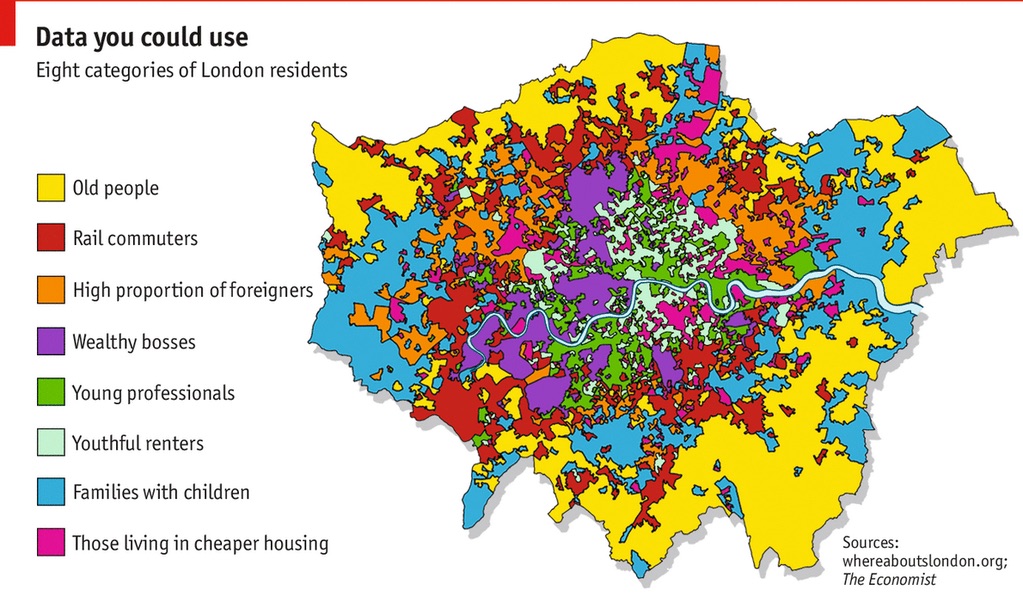
Mostly these websites act as tools for developers and academics to play around with. Since the first Datastore was launched in 2010, around 200 apps, such as Citymapper, have sprung up. Other initiatives have followed. “Whereabouts”, which also launched on October 23rd, is an interactive map by the Future Cities Catapult, a non-profit group, and the Greater London Authority (GLA). It uses 235 data sets, some 150 of them from the Datastore, from the age and occupation of London residents to the number of pubs or types of restaurants in an area. In doing so it suggests a different picture of London neighbourhoods based on eight different categories (see map, and its website: whereaboutslondon.org).

The result shows what many Londoners already instinctively know, but in a way which is visually striking: that, despite being divided into 33 boroughs, parts of the city can mirror one another. Young people cluster in rented digs in east or south London. Older people are spread much farther out. Many boroughs, in turn, have to cater for several different social types. Kensington and Chelsea, one of the wealthiest, is nearly exclusively uniform. But in Willesden, in north-west London, for example, older residents live cheek-by-jowl with young professionals and poorer people in social housing. Such data may question the way a city is divided up, suggests Dan Hill, an executive director at the Future Cities Catapult. It could also have implications for the way council services are provided, and whether schools or hospitals could be built across borough boundaries.

It makes sense that cities release reams of data for developers to fiddle with. Kit Malthouse, London’s deputy mayor for business, says the city does not know what to do with 60-70% of the data it collects. And academic research can be used by the providers of public services. Oliver O’Brien, a researcher at University College London, has mapped how many people enter and exit Tube stations, and how this has changed over time. His research has been used by Transport for London, the authority governing the city’s roads and underground, which released the data in the first place, but did not have such a nifty tool to look at them. Such data should be useful for staffing plans.

But along with releasing more data, the city should also be analysing them itself, argues Andrew Collinge, the assistant director of intelligence at the GLA, and using them to make decisions about the city. So far this has proved tricky. Part of the problem is that, in contrast to New York or Chicago, where large city-wide data stores are available, City Hall does not control every service in London. Each borough looks after local things such as waste collection. But not every borough will collect the same information, while private contractors may also run services. And there’s still a “culture battle” in order to persuade people to release more data, adds Mr Collinge.

This may be starting to change. Mr Collinge is trying to establish a “borough data partnership” to pool data more effectively, such as that on adult social care. This would make it easier to trace the impact of reforms to certain services on the city. And in five sites in London the Future Cities Catapult has installed sensors to monitor air pollution, in order to advise both councils and companies on how to deal with it.

It helps that the bosses of cities are also becoming keener on using data. An infrastructure plan for London launched in July by Boris Johnson, the city’s ambitious mayor, mentions data 25 times and devotes a section to how they can become a “key element of planning and operating cities”. Manchester is also good at commissioning reports full of statistics to make its case. As cities start to demand more power from Britain’s highly centralised government, their leaders will need to learn how to use data more effectively.


Source: http://econ.st/1sLSROx

For $1,000, Pop’s Sea Bar Offers Free Beer For Life

image.jpg

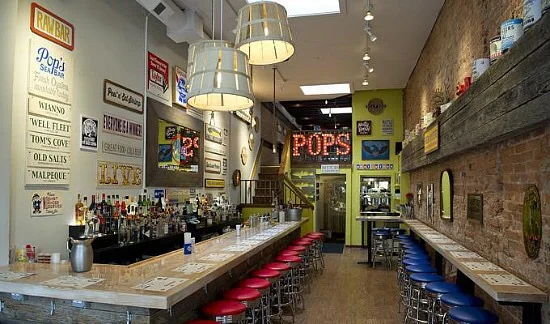
Pop’s Sea Bar in Adams Morgan has a rather unusual offering for twenty of its patrons: Pay $1,000 and get free beer and prosecco for life. 

“For $1000, you will receive a personalized VIP Member Card that entitles the owner to free beer (or Prosecco) for life!” the site for the promotion reads. “Just show the card anytime you come in and all of your beer is free for that visit. The card never expires, and you are welcome to use it as often as you like.”

The restaurant and bar that serves beach shack fare was opened by Justin Abad, co-owner of Cashion’s Eat Place, and John Manolatos in early September. The promotion is limited to twenty people and it’s non-transferable, so you can’t go in and get beers on the house for all your friends. 

Most beers at Pop’s run $6 a pop, so if you think you’ll drink more than 167, this could be the promotion for you.

Source: http://dc.urbanturf.com/articles/blog/for_...

IDRIS ELBA Rap Video

image.jpg

IDRIS ELBA!! Just saying that name causes some women to bite their lips and twist in their seats. He has a certain something that makes the ladies say, “uh” and the girls say, “ow!” But even with all of those things going for him, while many a woman pine away for him, THAT print, and his accent; I just want to make sure you never, ever forget that one time, when Idris TRIED IT.

For years he was the villainous, lordship of street pharmaceuticals – Russell “Stringer” Bell on the critically acclaimed HBO series, “The Wire”. And you know what, I believed him. I believed that Stringer Bell would kill you if he didn’t get his way. He owned that role and it has opened up doors for many great roles since.

Tyler Perry got ahold of Big Dris to play a wayward Daddy trying to do his best for his three daughters in “Daddy’s Little Girls”. Sure it was lackluster but again, Idris didn’t need more people, because after “The Wire”, we all knew that thug daddy was his thing. From Luther to Thor, Idris has been consistently killing Hollywood. So that’s why when I discovered the following video, I found myself confused, conflicted, and overcome with a laughter that rippled through my soul.

Idris Elba was once a budget rapper. I repeat, Idris Elba was once a budget rapper. Don’t believe me? That’s fine, you can watch his janky music video on the next page and see for yourself!

Can someone explain to me why the intro sequence went on so long? And who was homeboy with the Moleskine journal supposed to be? What’s in the journal and why did he have to hand it to the video vixen for safe keeping?

Was this attempting to be an homage to Belly when Tommy goes to meet with the leader before he kills him, but instead the version where the leader asks “King Driis” what happened to his “jam”? Smells like the thirst of Hazel as she cries to Yung Berg about the hit that isn’t happening.

Just when we thought we reached the abyss of terribleness, it gets worse – “King Driis” speaks. Clad in his generic rapper uniform – big ass white tee, LA fitted, and requisite tied up durag, he and the “jam hunter” start discussing the lack of said jam. WTF?!!

I was so lost as to why any of this occurred. But before I could process my thoughts, the beat drops and a baseline and video hoes abound – I wonder if there’s an explanation coming.

If you smartly assumed no further explanation was coming then see the video below


image.jpg
Source: http://www.teabreakfast.com/idris-elba-rap...

Stranded on the Sonic Highway: Dave Grohl, The Foo Fighters and the Most Important Music Lesson You’ll Ever Learn Read more

image.jpg

“This Is a Call To All My Past Resignations”

When I was five-years-old my dad bought me a drum set. It was a four-piece Slingerland Radio Kings kit with a midnight satin flame finish that came with a full complement of Zildjian cymbals, which my father proudly informed me were the best cymbals money could buy as I stood there looking up at him in awe. It was an insane purchase for a child, a fact I proved to my dad in short order by drawing pictures of Batman all over the drumheads.

As punishment for my cavalier lack of care for an item of considerable value, the drums were ultimately taken away, but not before I managed to actually sit down and start learning my way around them. I could keep a beat and found that I had begun to develop a little “independence” in the days before my expensive gift was shipped off to someone more appreciative and, presumably, a little older. I didn’t touch another pair of drumsticks for eight years.

When I did decide to begin playing again I was ferocious about it. My uncle was a jazz drummer and allowed me the use his kit for practice. I played hard, trained with the great Gene Thaler — who once taught a young Max Weinberg the basics — got pretty good and eventually fell in with some other musicians and we put together a band. We wrote songs. We recorded. We got radio airplay. We played out live. We gathered a good-sized following. We got very drunk. We loved every fucking minute of it.

The time I spent as part of a rock-n-roll band would end up being some of the best years of my life.

“It Started With a Spark”

As I sit here writing this I’m listening to the Foo Fighters. I listen, but something is missing.

When he entered the studio for the first time by himself 20 years ago, Dave Grohl says he didn’t have any grand plans to turn whatever he created there into a full-time project. He simply hoped to break the oppressive silence he’d allowed to surround and paralyze him in the wake of Kurt Cobain’s death. He just wanted the expression, in the most literal sense of the word — to force out what he’d kept buried inside him since his friend and the man with whom he’d shared a rocket ride to superstardom had put a shotgun in his mouth and ended it all — as well as the joy he got out of making music. That was all it was supposed to be. And yet the songs he recorded wound up becoming the Foo Fighters’ debut album and the band he built around that admittedly silly name, throughout various iterations, went on to crank out seven more.

Nirvana may have been a more important band, their rise certainly a seismic event in American music. But make absolutely no mistake: the Foo Fighters are a better band. Maybe it’s simply a matter of longevity and output, but somewhere along the way, over the past 20 years, Dave Grohl’s throwaway project became the best rock-and-roll band in America. Maybe its last, best hope for keeping rock-and-roll alive as an artistic force. Without an ounce of arrogance, Dave seems to be committed to doing just that: to using his band’s status to help ensure that the torch of American rock keeps burning. He’s doing this by looking backward at where music came from, peeling away the layers of sound and retracing our steps through the years to document the history of what we listen to in the United States. He calls this project Sonic Highways and it’s both the Foo Fighters’ new album as well as a current documentary series airing on HBO.

If you haven’t seen it, it’s a pretty simple concept that’s startlingly ambitious in its execution. The Foo Fighters travel to eight cities across the country. At each, Dave examines the development of the specific “sound” or sounds that make that town what it is musically, talking and playing with some of its most revered musicians and renowned tastemakers. During those interviews, he takes notes and ultimately turns those notes into lyrics the full band puts into a song they record at a legendary local studio in the area. So what you get is a sonic timeline detailing how, say, Buddy Guy and Muddy Waters begat Cheap Trick which begat Naked Raygun — and eventually Ministry, Smashing Pumpkins, Urge Overkill and Fall Out Boy — in Chicago or how Washington DC go-go came to collide and coexist with Bad Brains and Minor Threat. This country is so vast, with so many different musical styles, that a project like this works as both a revelation and a cultural artifact. Dave’s entire point is that despite our differences, it’s our music that connects us — it may be the only thing left with the power to connect us.

Dave’s love affair with music, so many kinds of music, is almost moving. He’s a firm believer in the idea that picking up an instrument and learning it — putting your blood and sweat and very soul into it and leaving it all out on a stage if you’re lucky enough — can literally save your life. There’s no denying that it saved his more than once and with Sonic Highways he’s not only looking back but paying it forward, trying to show upstart musicians of the next generation both their past and, if they choose, their future. The Foo Fighters’ message with this album and series is to inspire young people to learn to make music and continue this country’s rich artistic heritage. Because playing a song can change everything.

“If Anything Could Ever Be This Good Again”

I’m sorry I gave up — that I sold my drums and walked away.

I was always one of those people who believed that playing rock-and-roll had to be an all-or-nothing proposition. You couldn’t be someone who had an actual career and spent his weekends trying to “make it” in music. Those kinds of guys never did. To do it you had to be fully committed. You had to sleep on a floor. Subsist on Taco Bell. Be content with living out of a van. Anything else was a waste. And God fucking forbid you end up as one of those poor, pathetic assholes who plays Jimmy Buffett covers down at the local watering hole for nostalgic women in mom jeans. That was the nightmare I awoke from with disturbing regularity during my years in the band. I never wanted to be that guy. I dreaded one day becoming him — and so when the band folded I gave up completely. I lied to myself, not about a willingness to get a “real job” since I had no problem with that, but by believing that I’d be content to just listen to music for the rest of my life rather than playing it.

I told myself that whenever I put on a Led Zeppelin record, or a Mother Love Bone or Pearl Jam record, or a Killing Joke record, or even A Love Supreme — with the brilliant Elvin Jones on drums, backing up John Coltrane — that I’d be fine tapping out the beat or sneaking a quick air-drum fill if no one was looking. I was wrong. I was so wrong. And if I were a musician coming up now, Dave Grohl would’ve told me I would be one day.

During a recent interview for Sonic Highways, Dave explained how it was always all about the music for him. He was apparently never as much of a snobbish prick as I once was, because he says that even if he had to be that guy playing covers for a bar full of drunks on a Saturday night in Springfield, Virginia he would’ve kept doing it. He says this and although it’s an easy comment to make when you’re a multi-millionaire rock star, I kind of believe him. I have a friend who’s a professional drummer. He plays for the Offspring but before that he was in Saves the Day and My Chemical Romance and Devo and he’s managed to live the life of a passionate musician while also being completely passionate about his other life: his wife, his children, his home. It’s the same thing Dave Grohl does and it’s shattered every stupid rock-and-roll myth I ever used to hold tight to. There are never any guarantees that you’ll make it in the music business because it’s the hardest road imaginable, but the point is that it shouldn’t matter whether you make it or not.

The music — that’s what matters.

And if you’ve got the ability to make that, you’d be a fool to give it up.

I wish I had that old set of Slingerland Radio Kings again, the ones with the midnight satin flame finish and the Zildjian cymbals. I’d beat them ’til my fingers bled. I’d beat them ’til I wore those Batman drawings right off.


Read more at http://thedailybanter.com/2014/10/stranded-sonic-highway-always-music-mattered/#o2eCeQO2s3LbVQbF.99


image.jpg
Source: http://thedailybanter.com/2014/10/stranded...

Free Halloween Photo Booth Returning to Lincoln Park Block

image.jpg

What costs as much as candy and makes trick-or-treaters smile even more?

A Halloween photo booth, Hill resident Ryan Lovin says.

After Lovin and his wife Swapna moved onto Massachusetts Avenue SE two years ago, they were “amazed at the sheer number of trick-or-treaters,” he said. So, the tax attorney and amateur photographer decided to try something different last Halloween.

He created a Halloween photo booth by renting lights and setting up a backdrop in his front yard. In just a few hours, he took about 450 pictures of more than 600 people.

“Renting the equipment was the same price as getting candy, and it was definitely a lot more fun,” he said Tuesday.

The Lovins will set up the free photo booth in front of their house again on Friday. Trick-or-treaters can look out for it starting at 5 p.m., on Massachusetts Avenue between 13th and East Capitol streets SE.

People who smile (or scowl) for the camera will be able to instantly see their photos on a laptop. The images will then be posted to Flickr, where they can be downloaded for free.

“I was afraid people last year would just walk by our lawn,” Lovin said. “But it really took off. There was quite a line.”

Source: http://www.hillnow.com/2014/10/29/free-hal...

Fontus self-filling bottle condenses humid air into drinking water

image.jpg

the fontus self-filling water bottle by kristof retezar, collects the moisture contained in air and condenses it as safe drinking H2O. the device harvests up to 0,5 liters in an hour when under the right climatic conditions. it is useful for long bike journeys as well as in world regions where freshwater is scarce yet humidity is high. The bottles can be turned into a vertical position and loosened divided-in-two peltier element cooler is powered by solar cell energy to cool down the upperside and heat the bottom. wind enters the lower section at high speed and cools it down. the air then moves to the upper chamber where it is stopped by little perforated walls in order to separate the particles. the droplets then flow through a pipe to be stored in a container.

0,5l can be generated in an hour whilst in humid conditions, trial and testing was an important part of ‘fontus’ self-filling H2O bottle’s development. ‘after more than 30 experiments, I finally achieved a constant drop-flow of one drop of condensed water per minute. after developing a functioning inner system, I designed a compact and practical hull which can be easily attached to a bicycle, integrates the water bottle and can be comfortably handled.’ said kritstof for the james dyson awards. The device is helpful for long bike journeys diagram of how the air condenses and harvests water molecules


image.jpg
image.jpg
Source: http://www.designboom.com/technology/fontu...

The cost of driving

image.jpg

Where is the most expensive place to own a car?

REAL incomes have stagnated in many rich countries and family budgets are feeling the pinch. In Britain fuel costs 50% more than it did in 2007. But petrol prices are just one of the costs of running a car; owners also have to fork out for insurance, road tax and servicing. Using data from the Economist Intelligence Unit, our sister company, the chart below shows the total cost of buying a family car (an average of low- and high-end brands) in selected cities in 2010, then running it for three years. London car-owners may be surprised to see that they are no worse off than motorists in many other rich countries. Generally, where running costs are high, this is offset by cheaper car prices, and vice versa. Since 2005-07, in cities where the total cost of running a car has actually fallen, (notably in Amsterdam, Moscow and Shanghai) this is largely thanks to lower car prices. It is possible that some of the higher purchase price in emerging-market cities like Shanghai can be attributed to import costs for higher-end brands such as Mercedes and Audi, which were used to allow international comparison.

Source: http://www.economist.com/blogs/graphicdeta...

Georgetown micro-unit project

image.jpg

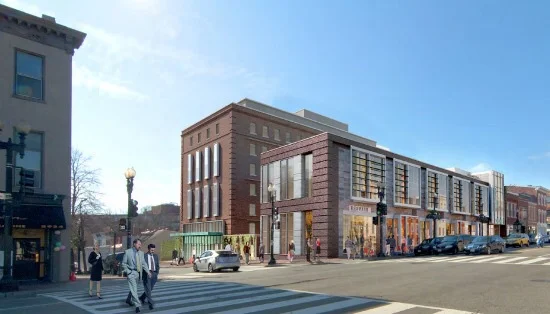
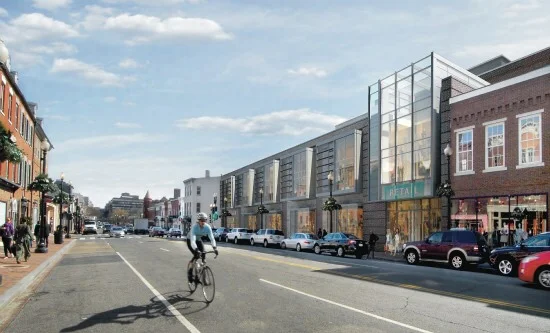
Deloper SB-Urban got the go-ahead today from the Board of Zoning Adjustment (BZA) for its planned micro-unit project on the site of Georgetown’s Latham Hotel.

The 140-unit development will incorporate the Latham Hotel and an addition at 3000 M Street NW (map). The apartments will be, on average, 330 square feet apiece, and they’ll come furnished. The project architect is Shalom Baranes Associates.

To make the development happen, SB-Urban requested a series of zoning variances and exceptions to modify the existing building into a micro-millennial paradise. The requests are:

  • A rear yard variance for an addition
  • A special exception to a parking requirement that would allow the company to provide 42 off-site spaces
  • A variance for the remaining 74 parking spaces
  • A variance for a loading dock and delivery space


image.jpg
image.jpg
image.jpg

The hotel currently has 54 parking spaces, which SB-Urban plans to convert into amenity space for its residents. The retail portion of the project alone requires 24 parking spaces onsite; the developer is proposing 42 off-site parking spaces for retail tenants and residents. Residents of the new development will receive Capital Bikeshare and car share memberships, but will sign a lease that prevents them from parking on Georgetown streets. 

On Tuesday, the BZA approved all of the above variances, a big win for SB-Urban as it is planning similar projects in Blagden Alley and Dupont Circle. 

“We received conceptual approval from the Old Georgetown Board in early September,” SB Urban’s Brook Katzen wrote to UrbanTurf. “Today’s BZA hearing was the last major hurdle.”

Below are more renderings of the planned project.

Source: http://dc.urbanturf.com/articles/blog/geor...

Another way Uber is better then a DCTaxi

image.jpg

You spoke, DC listened.

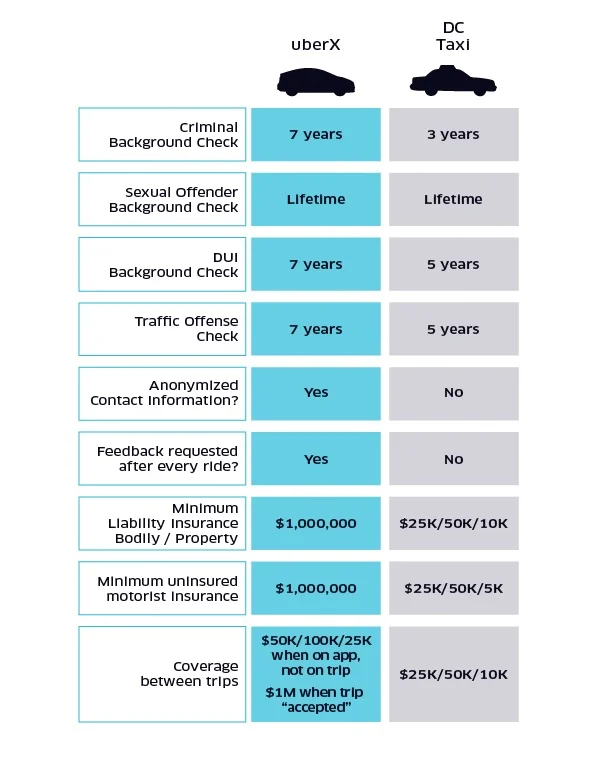
Nearly two years ago, the DC Council secured a place for Uber in the District. Today, we are thrilled to announce that the Council has passed a comprehensive ridesharing framework, providing a permanent home for uberX in the District. With this legislation, DC has become a trailblazer in the transportation industry by embracing innovation, supporting consumer choice and empowering small business owners.

From the beginning, Uber has required extensive background checks, vehicle inspections and top quality insurance coverage. This legislation affirms that responsibility and ensures that uberX is the safest and most reliable way to get around the District.

What’s in the bill:

  • Mandatory county, federal and multi-state background checks going back 7 years
  • $1 million primary insurance coverage from the moment a driver accepts a request–20x more than required by DC taxis
  • Annual vehicle safety inspections by a certified mechanic
Source: https://blog.uber.com/dc_clears_path_for_u...

Can Groceries Save the USPS?

image.jpg

pitballing ideas to head off the looming death of the United States Postal Service is a national pastime at this point. Should the aging institution embrace 3-D printing? Have its trucks install sensors to collect data? Slash Saturday delivery? Offer basic banking services?

Meanwhile, the deck chairs on the S.S. USPS continue to be reshuffled. Sunday delivery has been revived through an alliance with Amazon. To the chagrin of postal workers, in-store partnerships with Staples are being forged. And now, the postal service is exploring the idea of grocery delivery.

As The Washington Post reported, the Postal Regulatory Commission has signed off on a trial plan that would have the USPS "deliver groceries in San Francisco as part of a test project" that will last about two years and could expand into a national program. In essence, the trial would be an expansion of an existing collaboration between the USPS and Amazon, but with other retailers involved.

Federal law prevents the postal service from gaining an “unfair or otherwise inappropriate competitive advantage … particularly in regard to small business concerns.” According to The Post, the pilot program's revenue would be capped at $10 million.

David Williams of the Taxpayers Protection Alliance is pretty unequivocal in his opposition to the plan, and told me that the new program is "disconcerting" because it will most certainly hurt businesses, especially those that delivery groceries. "Whenever the government competes with the private sector, we're concerned," Williams said.

Williams pushed back against the commission's claim that there is "no reasonable expectation" that the entrance of the USPS into the grocery delivery game wouldn't disrupt the market. "They're competing directly with Pea Pod and other grocery services and using government vehicles to do it," he added.

Despite the opposition, there's already one curious aspect of the new program that seems to make it destined to be unpopular:

Customized Delivery is a package delivery service offering that will provide

customers with delivery of groceries and other prepackaged goods, primarily during a 3 a.m. to 7 a.m. delivery window.

I guess that's one way to make sure a customer is home when their packages arrive.


image.jpg
Source: http://m.theatlantic.com/business/archive/...

Frederik de Pue abruptly closes Menu MBK on Saturday

image.jpg

Less than a year after he transformed his struggling Penn Quarter seafood restaurant into an ambitious market and bistro called Menu MBK, Frederik de Pue closed the operation on Saturday, apparently at the demand of his partners who were looking for a higher return on investment.

Less than a year after he transformed his struggling Penn Quarter seafood restaurant into an ambitious market and bistro called Menu MBK, Frederik de Pue closed the operation on Saturday, apparently at the demand of his partners who were looking for a higher return on investment.


Frederik de Pue abruptly closed Menu MBK over the weekend after apparently failing to satisfy investors. (Photo courtesy of Greg Powers).

The abrupt closing will have no effect on Table, de Pue's refined, neighborhood restaurant in Shaw, nor his 42° Catering company in Rockville, both of which will remain open.

"For me, it's a sour feeling," the Belgium-born chef said Sunday about Menu's quick demise. "I gave it everything."

Menu MBK — named for its multi-format concept of market, bistro and kitchen — was supposed to be de Pue's solution to the under-performing Azur, his seafood restaurant that closed after six months in the same space. Menu's revenues continued to grow each month, the chef said, but not fast enough to satisfy his investors, who also own the building leased to de Pue. The investors will apparently find a new, presumably more profitable tenant or sell the building.

In early September, de Pue hired Dave Hansen, a veteran restaurant rehabilitator, to manage operations and inject new ideas into Menu. Hansen said he accepted the position because he wanted a creative outlet, helping to grow de Pue's portfolio of restaurants. Hansen had grown tired of playing the heavy, the hired gun who goes into a restaurant group and closes a property. Terminating employees has taken a toll on him, he said.

But on Saturday at the end of service, Hansen found himself back in that familiar position: He rounded up Menu's 40-plus employees and told them the restaurant was closed for good.  Some staffers will be absorbed into de Pue's other projects, Hansen said.

Both de Pue and Hansen have theories on why Menu MBK didn't measure up to expectations. The chef said the massive, 6,000-square-foot building simply requires more staff than other restaurants, which in turn requires more diners every night. Hansen thought the problem could be traced to the design of the building. Many locals thought Menu MBK was a market only.

"You could poll everyone on Eighth Street," Hansen said, "and most would not know there was a restaurant above" the market.

If there's a silver lining in the storm cloud over de Pue's head, it's that Menu's closing will free him up to return full-time to the Table kitchen.

"That's really where I have fun," the chef said. "I just want to do what I actually love doing, which is cooking."

Source: http://www.washingtonpost.com/blogs/going-...

Chipotle Accused Of Stealing From Its Workers

image.jpg

Chipotle Mexican Grill is being sued by workers in Colorado and Minnesota who accuse it of violating labor laws by purposely underpaying them

In a September 22 complaint in Colorado, the chain is accused of having “devised and implemented general policies and practices to deprive its hourly paid restaurant employees of the compensation to which they are entitled.” The practices allegedly include making employees work off the clock without pay through a number of mechanisms, one of which was using devices that automatically punched them off the clock even as they kept working. The attorneys for the different workers decided to collaborate when they realized all the workers were reporting the same problem.

Chipotle denies the charges, telling the Denver Business Journal that its policies are compliant with the law and, “The filing of a lawsuit is nothing more than allegations and is proof of absolutely nothing on its own.”

Chipotle isn’t the only fast food chain being sued over wage theft practices. Last week, New York Attorney General Eric Schneiderman sued Papa John’s franchiseesin New York for “significantly underpaying” more than 400 delivery drivers. The suit says the owners failed to pay them the minimum wage, paying as little as $5 an hour; failed to pay overtime; shaved hours off their paychecks; and required them to buy equipment for their jobs, such as bicycles and safety gear, with their own pay. 

The lawsuit came out of a year-long investigation into the franchisees’ pay practices and is the first to emerge from several probes into fast food pay practices. Schneiderman is seeking more than $2 million in backpay, damages, and interest. Papa John’s didn’t immediately respond to a request for comment and the franchisees could not be reached.

The lawsuits are just the latest accusations of unlawful pay practices in fast food. For an industry that already pays poorly — the average hourly full-time worker makes less than $19,000 a year — workers aren’t even guaranteed their full check. Nearly 90 percentof fast food workers nationwide say they have experienced wage theft. Lawsuits and actions have been brought against McDonald’sSubway, and Jimmy John’s, to name a few.

But they are not the only ones who have their pay stolen by employers. It’s estimated that employers rob their workers of more than $50 billion each year, more than triple the $14 billion taken from the victims of all robberies, burglaries, larcenies, and car thefts in 2012. The problem is getting worse, not better, as the number of wage theft cases filed in federal court increased from 5,000 in 2008 to nearly 8,000 last year.

These practices all violate the Federal Labor Standards Act, but to try and reverse the trend, some cities and states have enacted ordinances to crack down harder.

Source: http://thinkprogress.org/economy/2014/10/2...

Tyler Kord Asked Vans To Make A Pair Of Chef Shoes. And They Said Yes.

image.jpg

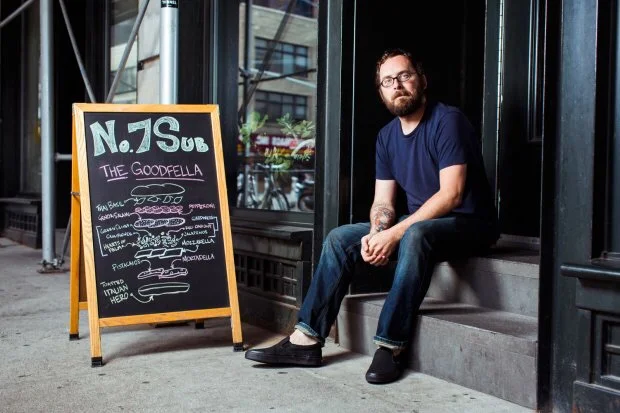
Tyler Kord in his No. 7 Vans Classic Slip-Ons, six years after his initial email to Vans North America.

Here's awesome proof that reading fan mail pays off. Vans shoes has one outstanding supporter in chef Tyler Kord — even more so now that the footwear company co-designed a pair of shoes with the owner of Brooklyn restaurants No. 7, No. 7 North and No. 7 Sub. "I've been wearing Vans since high school. My first pair were black slip-ons, and they were always in my rotation of shoes from then on," Kord tells us. "I always dreamed about wearing Vans all the time." So Kord did what any ardent fanatic would do: he found the contact info for one of the brand's higher-ups and sent an impassioned email making his case. Here's an excerpt: 

I wear Vans all of the time, both in and out of the kitchen, and often after a hard night of drinking, I sleep with them on. They’re great kitchen shoes because they’re cheap and have no laces, but unfortunately they don’t have non-slip tread. [Other brand name] have super cheap shoes with non-slip tread, but their shoes are janky. If somebody created a hybrid of your shoes and theirs, the world might explode, and every cook in New York City, and ultimately the world, would skate to work and then cook like champions who aren’t afraid of slipping on a greasy floor. We would probably invent new ways of eating and living.

Surprisingly six years passed before much happened. Eventually, Kord's request made its way to the inbox of Doug Palladini, Vice President and General Manager of Vans North America, who said he'd been contemplating ways to approach kitchen culture for a while. After an initial meeting with Kord, Palladini says, "there was no doubt he was the right guy to help us understand the best approach."

And so a new classic was born, the No. 7 Vans Classic Slip-On, to be exact. Designed specifically with the culinary industry in mind, these shoes are the first of their kind for the brand. Per Kord's suggestions and feedback, the shoes are enhanced with more cushioning and arch support for long shifts on one's feet, siped (thinly slitted) outsoles for better traction, Vansguard repellent for spatters and spills and a top-to-bottom black color scheme to hide stains. Palladini tells us that Vans plans to collaborate with a new chef/restaurant every few months and so far have several in mind with prototypes. For now, the current models are available to No. 7 cooks and staff members only. Supremely psyched by the outcome, Kord has even higher hopes for his collaboration: "It would be pretty sweet if "No. 7's" became the "Jordans" of kitchen shoes some day!"

Kitchen industry-specific enhancements to the shoes (here and below) include Vansguard liquid and stain repellent and siped outsoles for improved traction.


image.jpg
Source: http://www.foodrepublic.com/2014/10/21/tyl...

Chestnut Praline Latte, first new holiday flavor in 5 years.


image.jpg

As fall gives way to winter, are you afraid your daily pumpkin spice latte will still feel too autumnal? Maybe it's just a little too ... basic? For those suffering the PSL blues, Starbucks says its newest creation — a chestnut praline latte — will land in stores on November 12. As you might glean from the name, it's a latte with chestnut praline syrup, whipped cream, and praline crumbles, and "the first new holiday handcrafted beverage in five years" to boot, so the company's surely going to be peddling it hard all season, meaning you probably aren't in danger of missing out. 

The drink went head-to-head in a trial phasewith the cherries jubilee mocha last year, and has now emerged victorious — people who've had one of the test versions note a distinctGraham cracker taste, for what that's worth. 

Here's what those praline pieces look like on top:

image.jpg
Source: http://www.grubstreet.com/2014/10/starbuck...